
Why This Approval Stage Matters
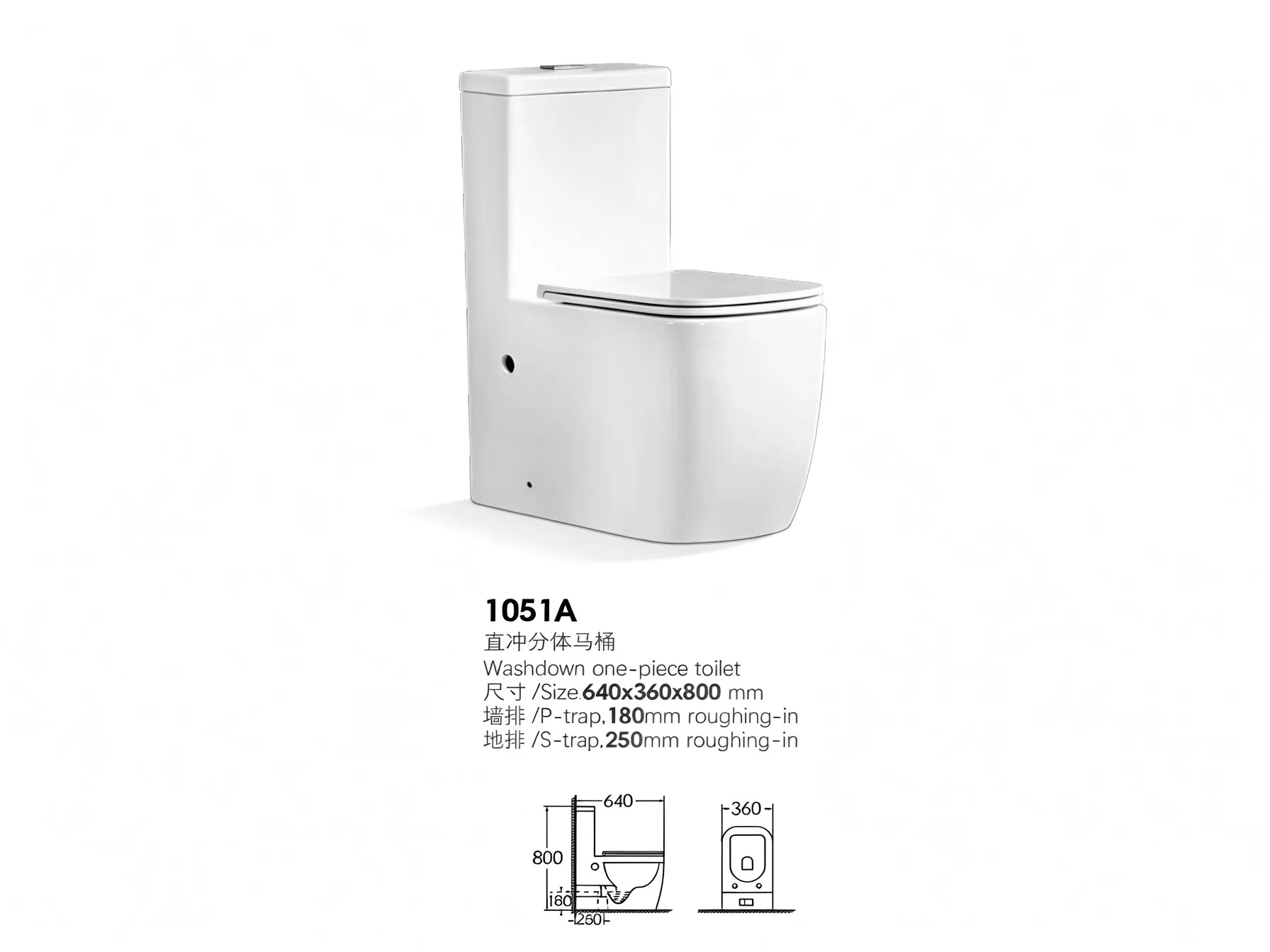
A ceramic WC looks like a small line item until it is specified across forty guest rooms or repeated through a residential tower. By the time sample approval is requested, the model has usually already passed design review on shape and finish. What remains is not taste but fit: whether the fixture physically suits the drainage that will exist on site, whether it can be maintained by housekeeping, and whether it can be re-ordered in a second batch without changing the look of the building. The Washdown One Piece Toilet 1051A is specified for both hotel and residential bathrooms, so the confirmation list below covers both settings.
1. Confirm the Drainage Layout Before the Sample
The most expensive mistake in sanitary ware procurement is approving a fixture that matches the drawing but not the pipe. The 1051A page lists two rough-in options, a P-trap wall drain at 180 mm and an S-trap floor drain at 250 mm, which lets one model serve different pipeline layouts. Confirming this is a site task, not a desk task.
- Measure from the finished wall face, not the structural wall. Tile battens, waterproofing and plasterboard change the final distance, and a rough-in measured on a bare wall can miss by enough to prevent the pan from seating.
- Confirm the trap type as built, not as drawn. Renovation packages in particular often inherit existing floor drains that no longer match the revised layout drawing.
- Check the finished floor level relative to the drain. A floor drain set too high after tiling prevents a proper seal and creates the kind of leak that appears only after handover.
- Record the confirmed rough-in in the purchase order. If two drainage conditions exist in one building, state which option applies to each room type so the wrong variant is not shipped against the wrong zone.
Sizes and plumbing rough-in details should always be checked against the current technical data sheet at the time of ordering. Drawings circulate for months and revision notes get lost; a written confirmation from the supplier, dated and attached to the order, is what protects the buyer later.
2. Confirm the Whole Suite, Not One Fixture
The 1051A belongs to the wider 1051 sanitary series, which also covers the Wall Hung Toilet 1051W, the Freestanding Pedestal Basin 1051S and the Wall Hung Ceramic Basin 1051B. Approving the WC in isolation invites a mismatch between the shapes visible in one room.
- Decide which rooms get the floor-standing pan and which get the wall-hung version. The wall-hung option leaves the floor clear for cleaning, while the one-piece floor-standing unit suits layouts where a concealed cistern is not available.
- Match basin height and projection to the vanity or wall condition in each room type. A suite looks consistent only when the ceramic outlines and projections relate to the joinery around them.
- Approve one complete mock-up bathroom rather than a single fixture on a showroom wall. Glaze sheen reads differently under project lighting, and the relationship between the pan, basin and mirror is what guests actually notice.
3. Confirm the Flushing and Water Supply Condition
The 1051A uses a washdown flush, described on the product page as delivering strong cleaning performance with economical water use. Performance in practice depends on the supply condition of the building, which is worth confirming before approval rather than after commissioning.
- Confirm the supply pressure and cistern fill arrangement planned for the project, particularly on upper floors of a residential tower or in a hotel with a shared riser.
- Ask which flush plate or actuator is intended if a concealed cistern is used, and confirm compatibility before ordering, since the interface between pan and frame varies.
- Agree what "economical water use" means for your documentation. If the project has a water-efficiency target or a certification submission, request the figures that support it in writing instead of relying on marketing wording.
4. Confirm the Glaze and the Cleaning Regime
The product description states that dense glossy glaze over vitreous ceramic resists limescale, stains and yellowing. In a hotel that claim only holds if housekeeping chemistry matches the surface.
- Request the supplier's recommended cleaning agents and any products to avoid. Acidic descalers and abrasive pads are the usual cause of glaze damage in the first two years of operation.
- Test the cleaning regime on the sample unit, including how limescale is removed where the water is hard.
- Confirm spare-part availability for the seat, cover and flush mechanism, because replacement hardware is what keeps a batch in service rather than being replaced wholesale.
5. Confirm Batch Consistency for Repeat Orders
Hotels and residential developments rarely buy everything at once. Guest rooms are fitted out in phases, and a second order eighteen months later should not introduce a visibly different white or a slightly different bowl profile.
- Ask how long the model is expected to remain in production and whether an alternative would be proposed if it is discontinued.
- Keep the approved sample physically, with the order reference recorded on it. It becomes the reference for inspecting later deliveries.
- Order a small buffer of identical units with the first batch for future replacements in guest rooms where an exact match matters.
6. Confirm Packaging, Delivery and Receipt on Site
Ceramic ware arrives intact or it does not arrive at all. SANTERSON's logistics service covers freight forwarding by sea, air and rail, customs paperwork, packaging and container loading, shipment tracking and door-to-door delivery, but the receiving step still needs an owner on site.
- Agree the packing standard and pallet arrangement before production, especially for mixed containers that also carry basins and shower sets.
- Define how damage is recorded at delivery — photographs against the packing list, with a written note on the delivery document — so a claim is supportable.
- Store cartons upright and unopened until the bathroom is ready, since ceramic stored in a wet trade area picks up plaster dust and chips from traffic.
7. Confirm After-Sales Responsibility Before Handover
The company's installation and after-sales service covers on-site installation, inspection and snags, warranty coverage, spare parts or replacement and ongoing maintenance. For a multi-room project, ask who performs each of these steps in your country and what evidence is required to make a claim.
- Confirm the warranty period and its exclusions in writing, including whether glaze and flushing mechanisms carry the same term.
- Agree the snag process for a phased fit-out, so defects found in phase two are not treated as out of time.
- Keep one spare cistern set and seat assembly in store to avoid waiting on a single replacement part while a guest room is out of service.
A Short Pre-Approval Checklist
Before signing off the 1051A, the project team should be able to answer six questions: which trap type and rough-in applies to each room type; whether the full 1051 suite has been approved together as one mock-up; what supply condition the washdown flush will operate under; which cleaning products housekeeping will use; how long the model stays available for repeat orders; and who is responsible for delivery inspection, snagging and warranty claims. A sample that passes all six can be approved with confidence. One that passes only the appearance test should go back for a second round.
Specify Bathroom Fixtures for Your Project
SANTERSON supplies Bathroom Sanitary Fixtures and other interior fixtures alongside furniture and building materials, with custom and OEM service, door-to-door logistics and installation support. Send the room set, drainage condition and target delivery window for your project and we will confirm the suitable configuration.