
Rammed earth walls have become one of the most requested finishes in boutique hotels, villas and restaurants. The problem is that a real rammed earth wall is heavy, thick and almost impossible to build on a curved surface or over an existing structure. That is exactly the gap the MCM flexible rammed earth panel fills: a thin, bendable clay-based cladding that reproduces the layered soil texture of traditional rammed earth and can be bonded to curved walls, columns and arches. Sourcing it from an overseas manufacturer is straightforward once you know which details to lock down before the order goes into production.
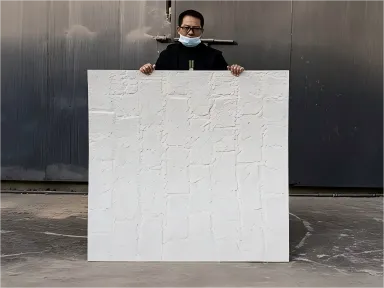
MCM flexible rammed earth panel used as an interior feature wall cladding.
What the Product Actually Is
MCM is a modified clay material, sometimes described in the trade as soft stone or soft ceramic. The panel is manufactured by moulding the clay surface so it carries the rough, stratified texture of a hand-built rammed earth wall, then backing it with a flexible layer. Unlike rigid stone or fibre-cement boards, the finished sheet can be bent and pressed onto cylinders, curved walls and other non-planar surfaces.
Two practical consequences matter to buyers. First, the panel is thin and light, so it adds very little load to a substrate and can be applied over gypsum board or a cementitious base rather than requiring a new masonry wall. Second, it ships as a flexible sheet, which changes how it packs, how much container space it takes and how easily the trade handles it on site.
Why Project Owners Choose It Over Real Rammed Earth
- Curved surfaces. Arched niches, rounded columns and sweeping feature walls cannot be clad with rigid slabs without cutting and kerfing. A bendable sheet wraps them directly.
- Weight. Applying a clay-look finish over an existing wall or a partition avoids the structural load of compacted earth or natural stone.
- Renovation work. Existing hotels, restaurants and retail fit-outs can be reskinned without demolishing the background wall.
- Site handling. The sheets cut on site with simple hand tools, joints are treated like tile joints, and there is no need for heavy lifting equipment.
Typical applications named by the product page include homestays and guesthouses, cultural tourism and heritage-style renovation, exhibition halls, restaurants, retail shops, villa feature walls and exterior wall renewal.
Specifications to Confirm in Writing Before You Order
Marketing descriptions of flexible stone tend to be thin on numbers. A purchase order that only says "rammed earth look panel, 200 m²" will produce disputes at handover. Ask the manufacturer to confirm each item below on a specification sheet you can attach to the contract, and check it against the sample you approve.
| Item | What to ask for |
|---|---|
| Panel format | Sheet size and thickness of the batch to be produced, not just a catalogue range. |
| Colour | The colours offered for this line are white and earth brown. Confirm which one, and request physical samples before production because clay tones shift between batches. |
| Texture direction | Whether the strata pattern runs horizontally or vertically on each sheet, and how joints should be laid to keep the layers continuous across a wall. |
| Bending radius | The minimum radius the sheet can take without cracking, so your designer does not specify a curve the product cannot hold. |
| Interior or exterior use | Whether the specific batch is specified for facade exposure, and what adhesive and joint treatment the manufacturer recommends outdoors. |
| Fixing system | The recommended tile adhesive type, trowel notch size, primer requirements and substrate preparation for both cementitious bases and gypsum board. |
| Cutting and edge detail | How edges are finished at reveals, corners and skirtings, and whether trims or mitred joints are used on the approved sample wall. |
| Packaging | How sheets are packed to prevent surface chipping in transit, and how cartons map to square metres for site counting. |
Approve a physical sample board, ideally dry-fixed on a small test panel, before releasing the full quantity. Photograph the approved sample and make it part of the order documents; that single step resolves most colour and texture arguments later.
Evaluating an Overseas Manufacturer
Flexible clay panels are a specialist line, not something every factory runs. When you shortlist suppliers, look for these signals rather than relying on price alone.
- A dedicated product page with real installation photographs and the actual sheet format, not only renders.
- Willingness to send sample boards before an order, and to quote against your stated quantity.
- Experience supplying decorative wall cladding alongside other project finishes, so the material arrives on the same shipment as the rest of the fit-out.
- A named contact who answers technical questions about adhesives, bending radius and exterior use, not only sales questions.
- Manufacturing continuity: confirm that the colour and texture you approve will be produced in the same finish for the full order quantity.
SANTERSON is a China-based manufacturer of furniture and building materials, supplying decorative wall cladding as part of a wider project package. If your rammed earth panels are only one line item in a villa or hotel fit-out, buying them through the same turnkey furniture and building materials supplier consolidates them into one shipment, one set of documents and one point of accountability for shortages and damage.
Related Flexible Cladding Options Worth Comparing
Before you commit to a single finish, ask the supplier for comparable flexible sheets so your design team can choose from physical samples rather than photographs.
- MCM flexible travertine stone veneer — the same soft-stone format moulded with the pitted surface of natural travertine, offered for interior and exterior cladding.
- Flexible rock stone panel — a mineral decorative sheet reproducing rugged natural rock texture, supplied rolled for transport.
- Flexible wood grain cement wall panel — a bendable cement-based sheet with a moulded timber surface, supplied with a plain raw face you can paint on site.
- Browse the full wall panels and wall cladding range to see how these finishes sit alongside other interior and exterior products.
Comparing three or four flexible options side by side usually settles the design decision quickly, and it also lets you order a mixed sample set in one shipment instead of chasing separate parcels from different suppliers.
Order Quantities and Lead Time Planning
Work from measured areas, not estimates. Take the net cladding area from your drawings, then add a cutting allowance for your layout — curved work and pattern matching consume more offcuts than flat tiling, so an allowance that suits rectangular walls will leave you short on arches and columns. Order the full quantity in one production run wherever possible: panels from separate runs can differ slightly in tone and texture, and a top-up order arriving after installation has started is difficult to blend in.
Fix your sample approval date first and work backwards to it. Production of the approved colour and texture follows sample sign-off, and the shipment date follows production. If the cladding must land with other fit-out goods, tell the supplier at quotation stage so the panels are scheduled into the same container rather than shipped separately at extra cost.
Freight, Packaging and Receiving
Flexible sheets pack more compactly than rigid stone slabs, which is one of the genuine commercial advantages of this material category. Confirm the packing method in writing — how sheets are stacked or rolled, what protects the moulded face, and how cartons are labelled by colour and area — so that damage claims are unambiguous on arrival.
When the delivery arrives, check before the goods leave the receiving area: carton counts against the packing list, visible damage to the moulded faces, and that every carton matches the approved colour. Photograph any damaged or mismatched cartons at that point. A supplier handling your wider fit-out can arrange sea, air or rail freight with the customs paperwork handled centrally, which keeps this inspection step simple.
Site Installation Checklist
- Substrate must be sound, flat and clean — cementitious base or gypsum board as the manufacturer specifies, primed if required.
- Use the recommended adhesive with the correct notch size; full back coverage matters more on a flexible sheet than on thick tile.
- Do not force a sheet below its rated bending radius. Warm the material if the site is cold and the supplier's guidance allows it.
- Plan the joint layout before fixing the first sheet so the rammed earth strata read continuously across the wall.
- Cut on site with simple hand tools; check reveals, corners and skirting details against the approved sample board.
- Treat joints and edges exactly as shown on the mock-up, and protect finished faces from trade traffic until handover.
Build one mock-up panel of about a square metre, including an inside or outside corner, and have the designer sign it off before the trade proceeds. It costs very little and it sets the standard for every wall that follows.
Common Sourcing Mistakes and How to Avoid Them
- Buying from a photograph. Clay texture reads differently in person. Approve physical samples before production.
- No minimum bending radius on the drawing. Specify it, or the installer will find the limit for you on site.
- Splitting the order across runs. Tone variation between batches is the most common complaint with clay-based cladding.
- Assuming outdoor suitability. Confirm the batch, adhesive and joint system for facade exposure before specifying exterior use.
- Leaving cladding to a separate supplier. A late panel delivery stalls trades who were scheduled around it. Consolidate it with the rest of the fit-out package.
A Practical Sourcing Sequence
- Send your measured areas, drawings and reference images to the supplier with the colour you want quoted.
- Request sample boards of the rammed earth line plus one or two comparable flexible finishes for comparison.
- Confirm sheet format, thickness, minimum bending radius, adhesive system and exterior rating in writing.
- Sign off a mock-up panel including corner detail before production starts.
- Release the full quantity as one order and schedule it into the shipment that carries your other fit-out goods.
- Inspect on arrival against the packing list and approved sample, then install from the mock-up standard.
If you are specifying flexible rammed earth cladding for a villa, hotel or restaurant project, send your drawings and required areas to SANTERSON for a quotation and sample boards. As a manufacturer of furniture and building materials, we supply wall cladding as part of a coordinated project package — production, freight documentation and site support handled through one contact.
Contact: PHILLIP | Phone / WhatsApp: +86-13928214007 | Email: santerson@qq.com