
A teak-look aluminium outdoor bench with an integrated picnic table solves a recurring problem on resort, villa and community projects: you want the warm appearance of timber in a shared outdoor area, but you do not want the sanding, oiling and board replacement that solid wood demands once guests start using it every day. Sourcing this category direct from a Chinese manufacturer cuts out middlemen and lets you change dimensions and colour to suit your drawings — provided you brief the factory properly and check the right things before the containers are loaded.
What the product actually is
These sets are aluminium furniture finished with slats that read as teak, sold as one family of related items rather than a single SKU. In SANTERSON's teak-look aluminium outdoor bench and integrated picnic table set, the family covers two formats. The first is a minimalist bench paired with a small side tray, intended for spots where people drop a drink or a towel — poolside edges, rooftop relaxation corners. The second is a picnic table with benches fixed to it, built for group meals in resort and shared garden settings, with an X frame that keeps the unit steady under constant use.
The material logic is the same across both: aluminium construction throughout, so rot, insects and salt spray are not the maintenance argument they become with solid timber. Slatted surfaces also shed rainwater instead of holding it. That is why this category keeps appearing in specifications for resort rooftops, villa gardens, clubhouse courtyards and community leisure areas — locations where a furniture budget has to survive both weather and public use.
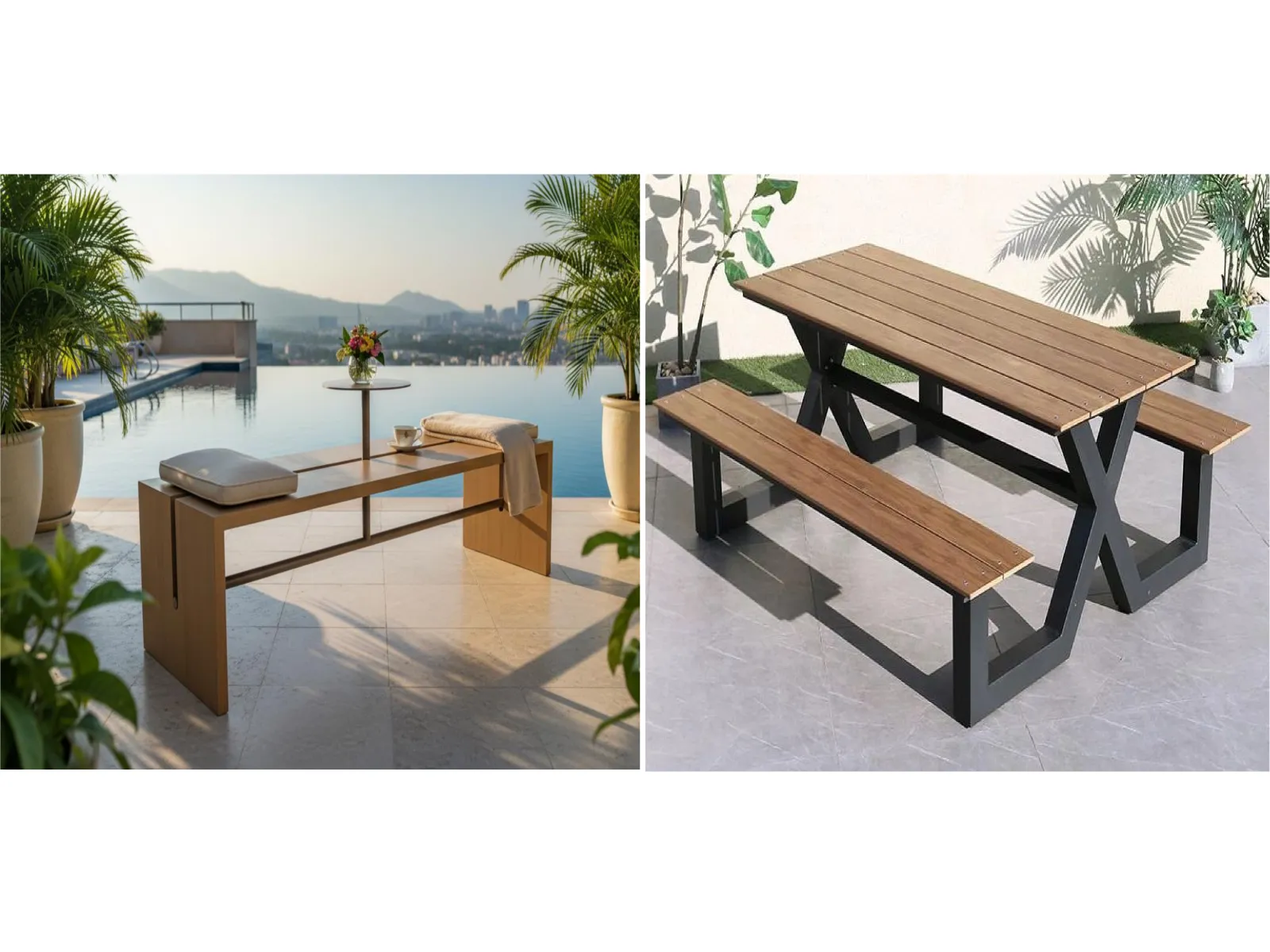
Two formats sharing one teak-effect aluminium slat aesthetic: bench with side tray, and integrated picnic table with fixed benches.
Why buyers source this category overseas
Buying through a local distributor is convenient, but on a multi-unit project the price gap compounds quickly, and customisation stops at whatever the distributor chose to stock. Working with a furniture and building materials manufacturer in China changes both variables: you pay closer to factory cost, and dimension or finish changes become an instruction on a purchase order rather than a search for a different product.
For this particular category that matters more than it might for, say, a stack of side chairs. A picnic bench has to fit the paved module you have already laid; a rooftop bench has to clear parapets and planting beds; a clubhouse set often has to line up with an existing pergola or shade structure. Custom and OEM service covers those adjustments — overall length, seat height, slat tone, frame colour — before production starts, which is far cheaper than compensating on site.
The wider argument for going direct is coordination. Most project buyers are sourcing outdoor furniture alongside flooring, wall and ceiling finishes, lighting, cabinetry and bathroom fixtures. Dealing with a one-stop furniture and building materials supplier means one specification language, one set of shop drawings and one shipment plan instead of six vendors who each assume someone else handled the interface.
Briefing the manufacturer: what to send in your enquiry
Most sourcing delays come from an enquiry that says "same as the photo, 20 units". Send these instead:
- Layout context. Where the set sits — pool deck, rooftop, courtyard, garden lawn — and what it sits on. Paving, timber decking and compacted gravel each change what the frame feet need.
- Dimensions you actually need. Overall length and width, seat height, and whether benches are fixed or free-standing. State the clearances you must keep for circulation and housekeeping access.
- Finish reference. Slat tone and frame colour against a sample or code, not a description like "dark grey". Two factories can read the same words completely differently.
- Quantity split and phasing. How many of each format, whether one delivery or staged across handover phases.
- Replacement parts you want on the order. Slats, fixings and cushion components are easy to include at production and awkward to reorder two years later.
A supplier running interior design and project coordination services can work from your drawings and return shop drawings for sign-off. Ask for those drawings before production, not after — this is the single cheapest checkpoint in the whole process.
The specification points to confirm in writing
| Frame and joint construction | Aluminium frame with powder coating; on integrated picnic sets, check how the bench-to-table connection is made and what frame bracing carries the load. This is where stability under shared use is won or lost. |
| Slat material and fixing | Teak-effect aluminium slats: confirm slat thickness, the gap between slats for drainage, and how each slat is fixed. Fixed slats that can be replaced individually are worth specifying for commercial areas. |
| Corrosion and coastal exposure | Aluminium does not rust the way steel does, but finish specification still matters near salt spray. Ask what coating system is used and state your site's exposure so it goes on the order record. |
| Cushions, if any | For cushioned variants, confirm outdoor fabric, foam type, whether covers are removable for cleaning, and the storage expectation you are designing around. |
| Anchoring and site loads | Any fixing to the substrate, load requirement or anchoring detail must be confirmed with your engineer against local requirements. Do not accept a factory statement as compliance evidence. |
| Packaging and container loading | Confirm how frames and slats are protected in transit and what the packing list looks like, so site teams can reconcile crates against the delivery plan. |
Treat supplier performance wording — weather resistance, low maintenance, durability — as a starting point for your own verification. Ask which tests exist, request a physical sample unit for one format before committing to the full quantity, and put the confirmed specification into the contract rather than the marketing sheet.
Building a coherent outdoor scheme across formats
A single bench rarely specifies alone. Projects that order integrated picnic sets usually also need dining, lounging and shaded seating in the same visual language, and ordering all of it in one teak-effect aluminium family keeps the palette consistent while each piece does a different job:
- Aluminium and teak-look slat outdoor dining set with adjustable sun lounger — for pool decks and café patios where the same slat aesthetic needs to extend to dining and reclining, and rapid drainage matters.
- L-shaped aluminium outdoor corner sofa set with teak-look slat tops — high-capacity group seating for terraces and restaurant outdoor lounges, with side benches that double as extra seats.
- Modern aluminium outdoor sofa set for patio, villa and hotel — chaise, armchairs and slatted coffee table for villa and boutique hotel lounges.
- Aluminium outdoor swing bench and chaise lounge set with teak armrest — quieter relaxation zones in villa courtyards and resort pool decks.
- Synthetic wicker outdoor dining sets with teak-look or sintered stone tops — where woven texture is wanted, with a sintered stone top option for high-use commercial dining.
- Motorised louvered aluminium pergola with LED strip and zip screens — the shade layer above any of the seating groups, which also protects the furniture underneath.
Order these as one package and you get consistent slat tones across formats, one production window, and one freight plan. Order them separately from three suppliers and matching colour becomes a problem you discover at handover.
Logistics, installation and what comes after the containers
For logistics and door-to-door delivery, agree the Incoterms and who handles customs clearance before production begins, then check the packing list against your site's receiving capacity. Outdoor furniture arrives bulky; a crate plan that assumes a loading dock you do not have is a site problem, not a supplier problem.
Assembly of integrated picnic sets is where projects most often go wrong on site, because fixed benches must land square on a level base. Confirm whether the supplier provides assembly drawings and guidance for your installers, and what installation and after-sales support covers — spare slats, fixings, cushion replacements — so you know what is available when a unit has been in public use for two years.
A practical sourcing sequence
- Send the layout, required dimensions and finish reference; request a quotation per format with unit quantities separated.
- Request one sample unit of the integrated picnic table, or at minimum a slat and frame colour sample set, before signing the full order.
- Review shop drawings: dimensions, joint detail, slat fixing, coating specification.
- Confirm Incoterms, packaging, container loading and delivery address; put the agreed specification in writing.
- Inspect before shipment — frame welds, coating finish, slat alignment — then reconcile on arrival against the packing list.
That sequence adds a week or two to the front of the job and removes most of the arguments at the back of it.