
A sample board of European oak engineered flooring arrives looking perfect on your desk. Three weeks later the quotation for the same product reads differently, and the finish you approved is nowhere in the specification sheet. Comparing samples and proposals side by side is how buyers avoid that gap — and how they end up with a floor that matches the drawing, not just the photograph.
This guide walks through the checks we apply when reviewing European oak engineered flooring for villa, hotel and residential projects, using our European Oak Engineered Wood Flooring (2209) as the running example. The same method works across the rest of our engineered wood flooring range and any other supplier's paperwork.
Start With the Sample, Before You Open a Single Quotation
Order the sample before you request pricing on volume. A physical board tells you things no specification sheet can: how the grain reads under your own lighting, whether the knots are sparse or dense, and how the surface feels underfoot. Photograph the sample next to a colour swatch from the project palette so you have a reference point when proposals start arriving weeks apart.
Label every sample with the supplier name, product code and date received. Buyers who request boards from three or four sources routinely receive items that look near-identical but carry different codes; without labels, the comparison table collapses by the time the third proposal lands.
Read What the Specification Actually Says
The construction of an engineered board determines how it behaves once installed. Two boards with the same oak face can perform very differently if the backing differs. Check these items on every proposal:
- Wear layer thickness. Our 2209 board carries a 3mm solid oak top layer. A thicker face layer means more room for sanding and refinishing over the life of the floor, and it lets the grain read with more depth than a thin sliced veneer.
- Core construction. Both products use a multilayer structure that reduces deformation. Ask what the core layers are made of and how they are oriented; cross-laid plies resist movement far better than a single-direction backing.
- Board dimensions and layout format. Plank, parquet and herringbone formats are laid out differently, and the wastage allowance changes with each. A proposal that quotes only square metres without stating the format invites disputes at installation.
- Finish type. Brushed, oiled and lacquered finishes age differently and need different aftercare. The finish should be named in writing — including whether the board is smoked or bleached — not described as "natural oak look".
Compare the Appearance Description Word by Word
Oak is a variable material, and honest product copy says how variable. Read the appearance language in each proposal carefully:
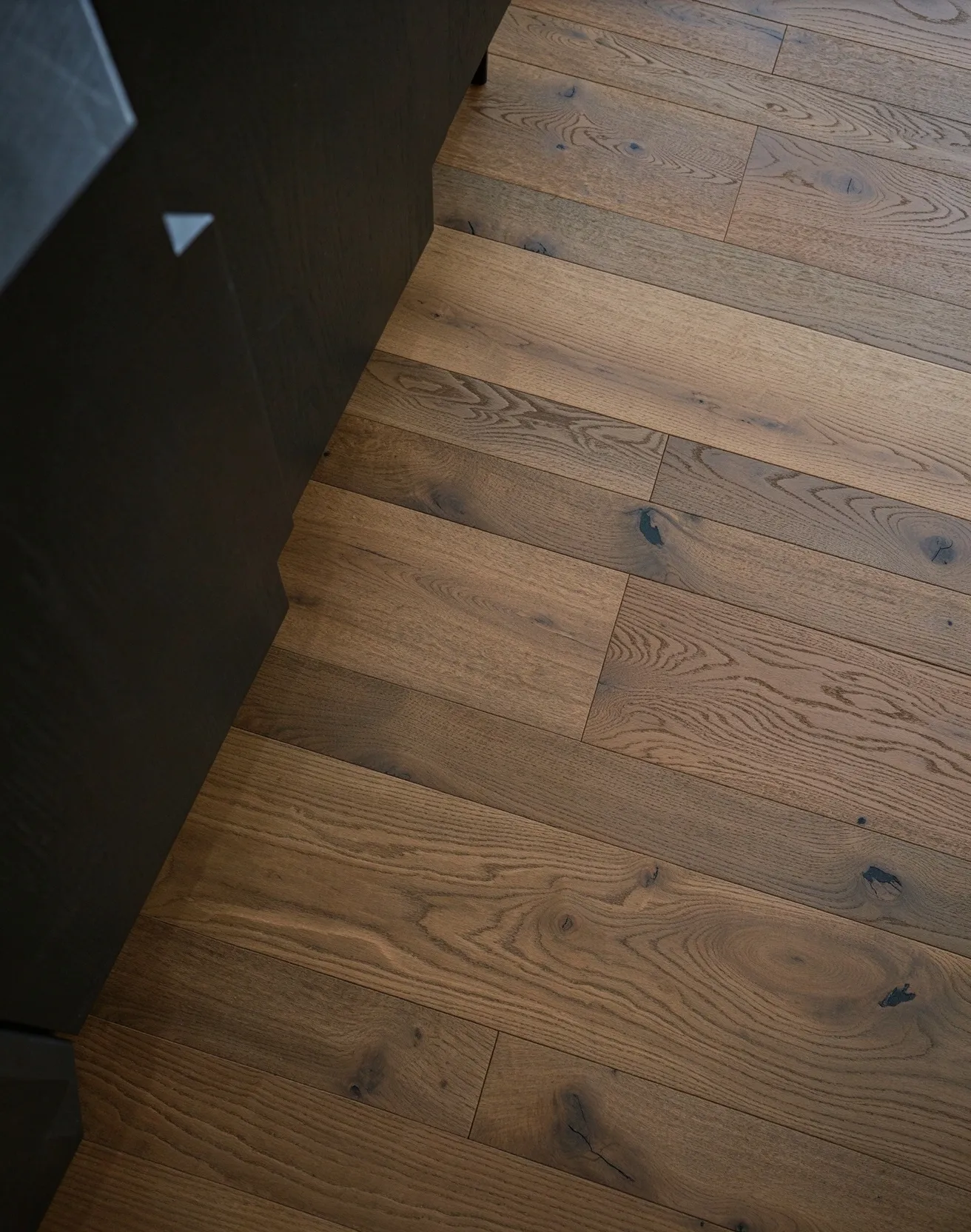
- Knot character. Some boards are described as showing natural knots and rich grain; others mention subtle knots or a clear cut. Knot density changes the whole feel of a room, and "character grade" means different things between mills.
- Tone range. The 2209 finish is described as warm and smoked, with natural knots and rich grain. A proposal that says only "smoked" gives you no basis for comparison against a second supplier's smoke, so ask each one to name the tone in writing.
- Grain figure. Quarter-sawn, rift-cut and plain-sawn faces produce different visual rhythm across a large floor area. For long runs in a hotel corridor or open-plan villa, this matters more than the colour.
Put Every Proposal Into the Same Table
Once you hold samples and written quotations, build one comparison table with identical rows for every supplier. The columns below are the ones that most often reveal a difference in scope rather than in price:
| Row to compare | Why it decides the outcome |
|---|---|
| Product code and finish name | Confirms the board you approved is the board being priced. |
| Wear layer and core construction | Two boards at the same price are not the same product if the construction differs. |
| Board size, thickness and format | Determines layout, wastage allowance and installation time on site. |
| Quantity basis and unit of measure | Square metres versus pieces versus cartons quietly change the total. |
| Packaging method | Flooring damaged in transit is a cost you carry, whoever caused it. |
| Freight terms and destination | Compare on the same Incoterms basis, or the lowest quote wins for the wrong reason. |
| Sample and pre-production approval steps | States who signs off what, and when changes become chargeable. |
| Aftercare and finishing products | Whether maintenance oil, trims and underlay are included or extras. |
Check the Approval Trail Before You Commit
The strongest proposal is the one whose approval process you can follow. Ask each supplier to state, in writing, which stages require your signature:
- ✔ Sample acceptance — signed sample record with product code and finish.
- ✔ Specification confirmation — written dimensions, construction and appearance grade.
- ✔ Pre-production confirmation — for custom or non-standard orders, a production reference board before the run starts.
- ✔ Packing list review — quantities and carton markings checked against the order before dispatch.
Suppliers who cannot describe these stages clearly will not be able to defend them when something goes wrong on site. Where a supplier offers custom furniture manufacturing and OEM production, the same trail should cover finish samples and any bespoke dimensions.
Price Per Square Metre Is the Last Column, Not the First
Two quotations for "European oak engineered flooring" can differ by a wide margin because one includes bevelled edges, matching trims and reinforced cartons while the other does not. Normalise everything to delivered cost per square metre of installed floor, including wastage at the format's realistic rate. Only then is the price column meaningful.
Buyers coordinating flooring alongside other finishes often find that consolidating several categories with one supplier removes coordination risk — matching a floor to wall panels and wall cladding, for instance, is easier when both come from the same production schedule and the same shipment.
A Short Checklist Before You Sign
- The sample you approved carries a product code that appears on the quotation.
- Wear layer thickness and core construction are stated in numbers, not adjectives.
- Tone, knot character and grain figure are described in writing.
- Format, board size and wastage allowance match the drawing you issued.
- Freight terms, packaging and aftercare items are itemised on one basis of comparison.
- Approval stages and who signs each one are named in the contract.
Send us your flooring schedule
Share the product code, area take-off and installation drawings for your project and we will return a written specification, a sample record and an itemised quotation on a single comparison basis — alongside our wider building and construction materials range where consolidation helps.