
How to Plan Stakeholder Approvals for a Modern Luxury Abstract Polyester Shiny Silk Area Rug
On most villa and hotel fit-outs, the area rug is one of the last items on the procurement schedule and one of the first items to cause a disagreement. The design team wants the sheen and abstract pattern of a modern luxury abstract polyester shiny silk area rug. The client representative worries about wear in a corridor. The contractor wants to know whether the size on the drawing is a standard size or a made-to-order dimension. Each party signs off for different reasons, and when those reasons are not written down, approval stops mid-project.
A stakeholder approval plan fixes this before purchase orders go out. It names who decides each attribute of the rug, what evidence they need to decide, and in which order the decisions happen. Below is a practical framework we use on furniture and building-material projects that ship from our factory to villa, hospitality and office sites.
Step 1: Map the Roles Before You Map the Product
Write four columns on one page. Each column is a role, not a person's name, so approvals survive when someone leaves the project.
- Design owner — approves pattern, colour tone, pile appearance and how the rug reads against the flooring and wall finishes.
- Commercial owner — approves unit price, freight method, spare quantity for future phases and payment milestones.
- Site owner — approves size, delivery route, storage conditions and the sequence of laying the rug relative to painting, joinery and furniture installation.
- End-user or operator — approves cleaning method, traffic suitability and who maintains the rug after handover.
One named individual signs each column. If one person holds two roles, say so explicitly; ambiguity here is what produces a "we thought you approved that" email three weeks before shipment.
Step 2: Split the Rug Specification into Approvable Items
A single approval request for "the rug" invites partial answers. Break it into attributes, and give each attribute an owner from Step 1. For a shiny silk polyester rug in the range we manufacture, the practical list looks like this:
| Attribute | What the approver is really deciding | Evidence to request |
|---|---|---|
| Fibre and surface | Bright silk versus shrink yarn blend, and how much gloss the room can carry under its own lighting | Physical sample under the same lamp type as the site; photograph of the sample at an oblique angle |
| Total thickness | Whether the pile height clears door thresholds and sits flush with adjacent hard flooring | Cross-section photo of the sample edge; threshold heights from the site survey |
| Pattern scale | Whether the abstract motif reads correctly at the actual rug size rather than on a small swatch | Full-scale printed pattern section, or a digital mock-up at true dimensions |
| Size and cut | Standard size versus a made-to-order dimension for the room | Dimensioned room layout signed by the site owner |
| Cleaning and upkeep | Who cleans it, how often, with what method | Maintenance note from the supplier written in plain language |
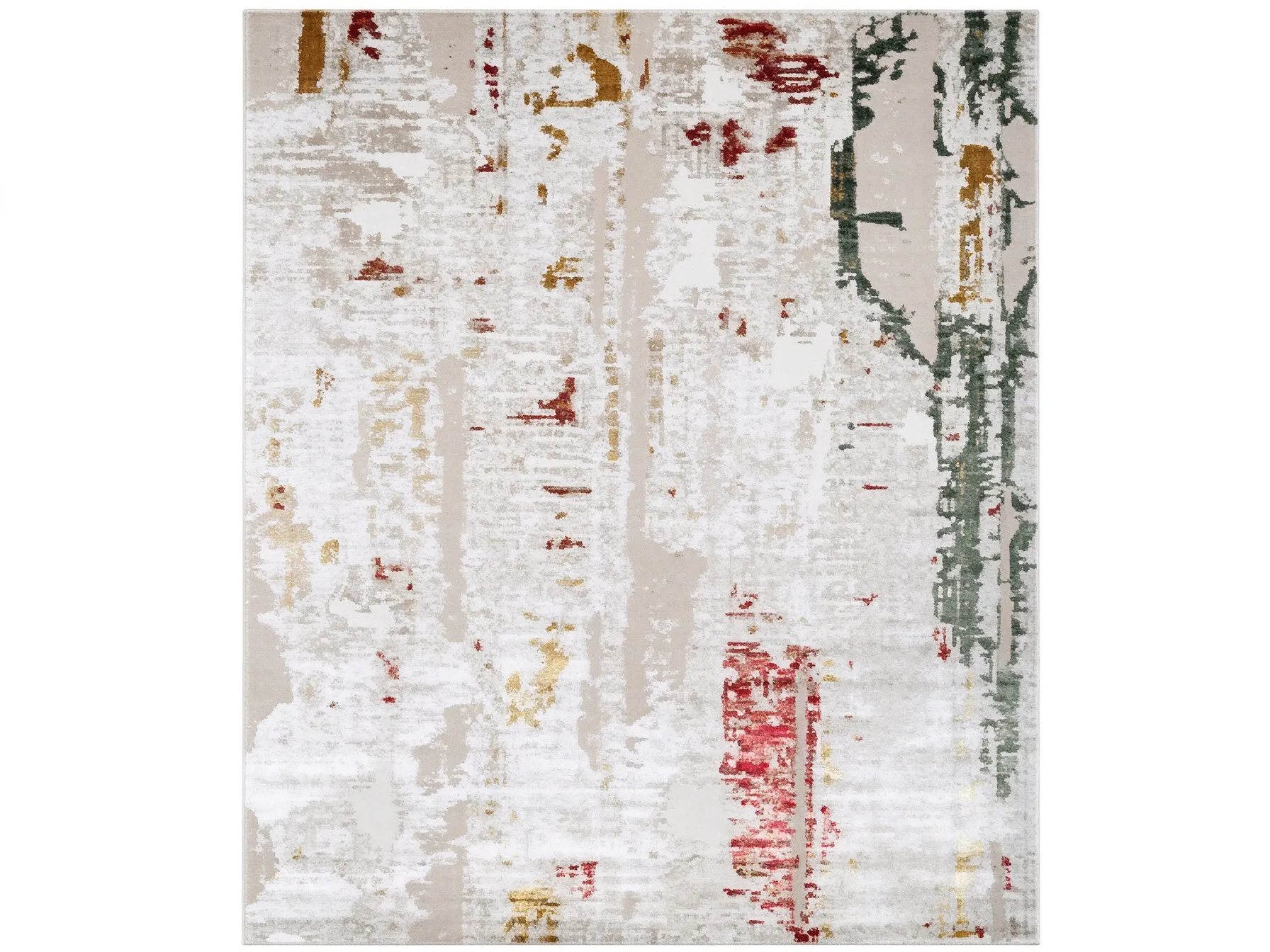
Our shiny silk area rugs are woven from polyester bright silk with polyester shrink yarn, at a 12 mm total thickness as listed on the product page, with abstract patterns and a soft gloss finish. Confirm that figure against the current production batch before any approver treats it as fixed.
Step 3: Set the Approval Sequence and the Deadlines That Follow From It
Approvals have to run in the order that protects the production lead time. Sample approval comes before size confirmation, because a made-to-order width changes both tooling and packing. Size confirmation comes before the purchase order, and the purchase order comes before the delivery slot is booked.
- Sample stage. Request samples before production for any custom specification. The design owner and the end-user review them together, so the person who will clean the rug sees the pile on day one.
- Layout stage. The site owner returns a dimensioned layout. Sizes are recorded in millimetres, including which edges meet a threshold or a wall.
- Order stage. The commercial owner signs the order with quantity, spares and freight method stated on the same sheet. Trial orders with flexible minimum quantities let you test one room before committing the whole floor count.
- Handover stage. The operator signs a short maintenance note alongside the rug, so upkeep does not become an argument after practical completion.
Rule of thumb: no attribute should be approved by more than one role. Where two roles genuinely care about the same attribute — gloss level being the common one — give the design owner the decision and make the end-user a reviewer with a fixed comment window.
Step 4: Match the Rug to the Wider Finish Package
A rug approved in isolation rarely survives site conditions. It meets engineered timber, stone or tile at an edge; it sits under a sofa leg; it runs into a doorway with a small threshold height. Coordinate three things with the rest of the finish package during approval:
- Flooring transition. Confirm which side is higher and how the edge is finished, so the pile does not fray at a hard joint.
- Acoustic expectation. Rugs contribute to noise reduction in living rooms, lobbies and guest rooms. State what the rug is expected to do so nobody measures it later against an unstated target.
- Adjacent textiles. Where wall-to-wall carpet also appears, for example in custom commercial carpet for hotel and villa projects, check colour and pile contrast between the two at full scale rather than from separate sample books.
Step 5: Keep One Approval Record, Not Four Email Threads
Consolidate decisions in a single sheet that travels with the order: attribute, decision, who decided, date, and reference sample code. When the shipment arrives, the site team checks against that sheet. Any late change is written on the same document with a note of what it affects — production start, packing list, or delivery sequence.
For buyers coordinating rugs alongside other fit-out items, our carpet collection and turnkey project service cover design coordination, manufacturing and door-to-door delivery, so the approval sheet becomes one line in a single procurement schedule instead of a separate vendor conversation.
Common Failure Patterns Worth Pre-empting
- Gloss judged in the showroom. Shiny silk reads differently under warm, low-level residential lighting than under a bright lobby. Judge samples on site or with the actual fitting.
- Size approved from a rendering. A perspective image hides scale errors. Only a dimensioned layout should carry a signature.
- Cleaning decided after handover. The maintenance method influences fibre choice, so leaving it to operations usually means re-ordering later.
- Spares forgotten. Dye lots vary between production runs. Agree the spare quantity at order stage with the commercial owner.
If you are specifying a shiny silk area rug for a villa, hotel or office interior and want samples plus a dimensioned proposal, contact SANTERSON with your room layout and lighting notes. We will confirm the current specification for the batch, prepare samples for each approver in your plan, and return a made-to-order size quotation.