
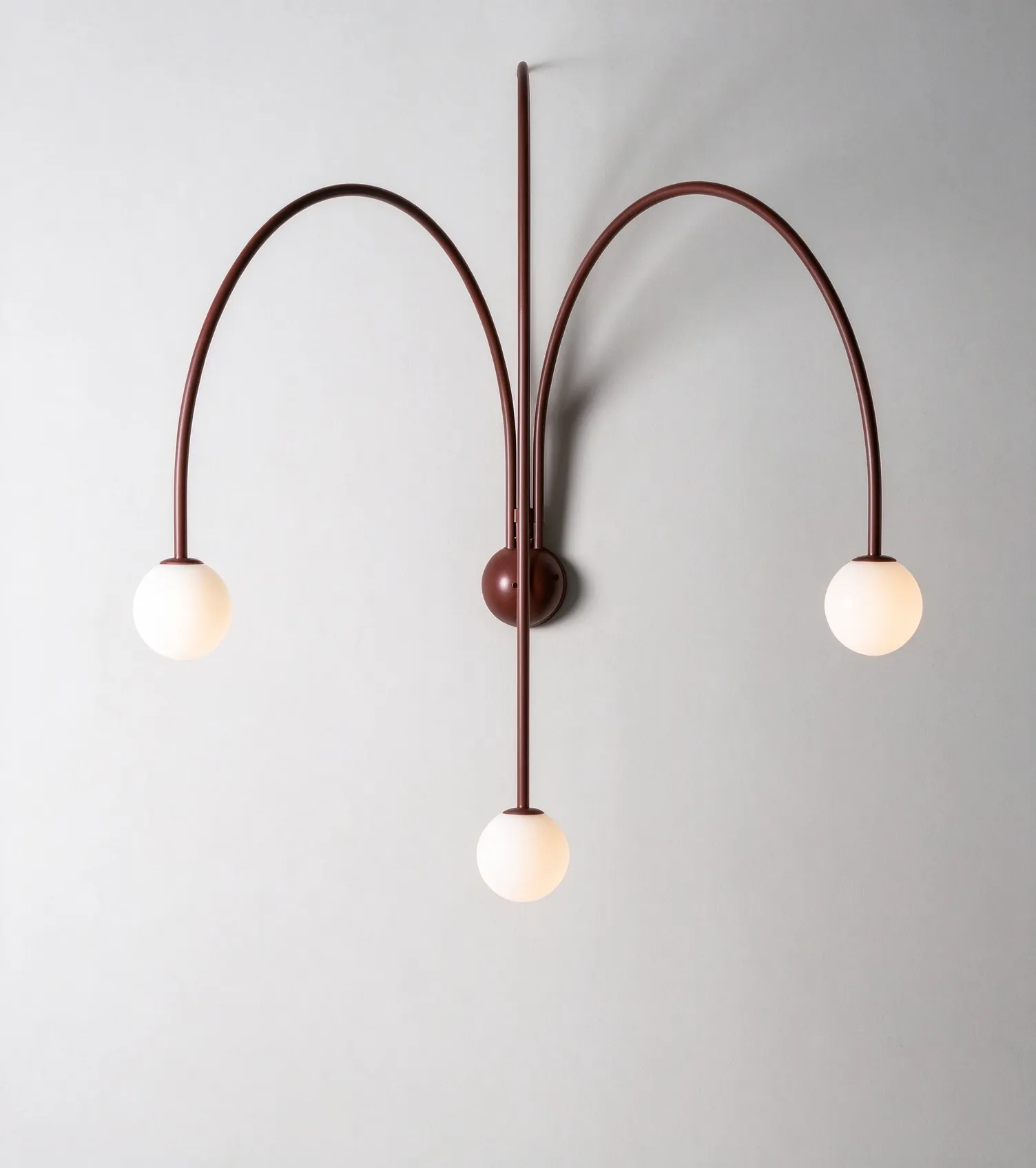
A sculptural wall light rarely fails on aesthetics. It fails in the approval chain: the interior designer wants the silhouette, the procurement manager wants one price line, the electrician wants to know where the junction box sits, and the client cannot picture either. The Modern Arch Ball Wall Lamp - Curved Sconce with Glass Balls for Bedroom & Living Room is exactly the kind of decorative fixture that needs a written approval path before an order is placed, because its curved metal arches and opaque white glass ball shades change how it reads on site once several units are installed in a row.
This guide sets out who signs off on what, in which order, and what each party needs to see. It applies whether you are specifying sconces for a single villa bedroom or repeating them through guest rooms and corridors of a hospitality project.
Who Actually Has to Say Yes
Stakeholder approval is not one signature. On furniture and lighting packages we work on, five roles hold a veto, and each blocks the order for a different reason:
- Interior designer or design lead — approves proportion, finish, glass colour and how the fixture sits against the wall finish.
- Client or owner's representative — approves the visual decision and the budget line it belongs to.
- Procurement or quantity surveyor — approves unit price, quantity, packaging schedule and what is included in the quoted price.
- M&E consultant or electrical contractor — approves mounting method, wiring outlet position and whether the fixture can be swapped without reworking the wall.
- Site installation team — approves that the delivered item can actually be fixed to the built wall as drawn.
Most rework on decorative lighting comes from treating the last two as afterthoughts. A curved sconce with ball shades has an asymmetric depth profile: the arch carries the shades away from the wall, so the outlet position and the clearance to a wardrobe door, bedside table or headboard matter more than they would for a flat plate fitting. Get the installer into the loop at sample stage, not at delivery.
Set the Approval Sequence Before You Send an Enquiry
The sequence below takes roughly three rounds of sign-off and avoids the classic situation where a client approves a photograph and then rejects the installed result. Run it in this order:
| Round | What is submitted | Who signs | What closes at this round |
|---|---|---|---|
| 1. Concept approval | Product page, dimensions, finish options, a rendered or photographed room reference | Designer + client | Fixture type is fixed; alternative models are dropped from the comparison list |
| 2. Technical approval | Mounting detail, backplate position, wiring outlet location, quantity per room | M&E / electrical + site team | First-fix wiring can proceed without waiting for the fixture |
| 3. Commercial and sample approval | Quotation with quantities, packaging list, physical or photographic sample of glass shade and arch finish | Procurement + client | Order released to production |
Recording each round in one line — who approved, what date, against which document — protects the whole package. When a project runs across villas or multiple guest-room types, that record is what stops a late change request from reopening fixtures already in production.
What Each Stakeholder Needs to See
The designer: the silhouette at real scale
Designers approve this fixture for the sculptural form — curved metal arches with opaque white glass balls that read as a decorative object when switched off. Send the product image at true proportion against a known reference, not a stylised marketing crop. Confirm three things in writing: overall projection from the wall, shade diameter, and whether the finish of the arch is to be matched to ironmongery elsewhere in the room.
The client: the light, not just the shape
Owners decide on atmosphere. The practical question they ask on site is "is this enough light for reading in bed?" Answer it with a layout, not an adjective. For bedside use, pair mirrored units either side of the headboard and keep the switching position agreed before first fix. Over a hallway or stair landing, treat the fixture as accent lighting and confirm what else illuminates that space.
Procurement: one comparable line item
Buyers need quantities, packaging and a like-for-like comparison. Ask for the fitting quoted per unit with the backplate and fixing hardware listed, and state clearly whether bulbs or light sources are included. If the same sconce appears in guest rooms, corridors and suites at different quantities, request a schedule by room type so partial shipments can be released against the site programme.
The electrical side: mounting before ordering
Send the mounting outline and required backplate position to the electrical contractor with the enquiry, not after the order. Confirm the outlet will sit behind the wall base of the fixture, and confirm what is behind the wall — insulation, blocking timber, a service run. Where walls are clad in panelling or stone rather than plasterboard, the fixing method changes and that detail needs approval from whoever owns the wall build-up.
Decisions to Close Before Production Starts
- Quantity per room and total count. A single missing unit at handover is a visible defect in a completed room.
- Glass shade colour and finish. Confirm the white of the ball shades against the paint or panel it will sit on; warm white and cool white glass read very differently against cream joinery.
- Light source specification. Brightness, colour temperature and dimming behaviour should be agreed with the M&E consultant. Do not leave the lamp choice to site.
- Switching and control. Local switch, bedside switch or a controlled circuit — this is an electrical decision that changes first-fix cost.
- Spares. Order a percentage of spares with the main package. Glass shades are the item most likely to be damaged in the snagging phase, and a later re-order carries its own lead time.
Coordinating Lighting With the Rest of the Package
Wall lights rarely arrive alone. In villa and hospitality work they land alongside wardrobes, vanities, joinery and flooring, and each of those trades needs the same wall. A sconce positioned over a bedside wall competes with a wardrobe door swing; a fixture beside a vanity has to clear a mirror cabinet and its own lighting. Wall sconces should be drawn on the same coordinated set of elevations as the cabinetry, with one party owning that drawing.
Sourcing the lighting from the same supplier as the joinery, bedroom storage and bathroom ceramics shortens this coordination. One one-stop furniture and building materials supplier means one consolidated container, one packing list to reconcile at delivery, and one point of contact when a snag appears — which is where approval records earn their keep. SANTERSON works this way on villa and hospitality projects: design consultation and space planning, material and product specification, manufacturing and quality control, then logistics, installation support and after-sales follow-up under a single project coordinator.
Sample Approval: What to Check Physically
For a decorative fixture with glass components, a physical sample changes decisions faster than any drawing. Handle it and check:
- The arch finish against your ironmongery and door furniture samples.
- Whether the glass ball shades are consistent in tone and wall thickness across units — variation is obvious when fixtures repeat along a corridor.
- How the fitting sits off the wall, and whether the backplate can be concealed once mounted.
- Accessibility for cleaning and for replacing the light source without taking the fixture down.
Delivery, Snagging and Final Sign-Off
The last approval happens on site. Inspect glass shades the day the cartons open, before fixtures are distributed floor by floor — a damaged shade discovered after installation means cutting the fixture out of a finished wall. Mark each room's units with its room number at unpacking, keep the spares in one labelled crate, and photograph the completed rooms once lights are energised and switched. Those photographs close the sign-off loop: designer, client and site team all confirm against the same image.
Where a project is being furnished from overseas, agree the packing and container loading schedule during round three of the approval sequence, so lighting arrives in the phase that matches the wall finishes rather than sitting on site for months.
Frequently Asked Questions
How many stakeholder rounds does a decorative wall light really need?
Three: concept, technical, commercial. Concept and commercial can be combined when the client is decisive and a sample is available, but do not merge the technical round — first-fix wiring waits on it.
Can the same sconce be used in bathrooms as well as bedrooms?
Only where the fitting's rating and the supplier's stated suitability cover that location. Bathrooms are zoned by exposure to water, and the required ingress protection differs from a bedroom wall. Confirm the rating in writing before extending a bedroom specification into bathrooms.
Who should own the approval record on a multi-villa project?
One named person, usually the project coordinator or interior design lead. Split ownership is how identical fixtures end up ordered to two different specifications across otherwise identical rooms.
Should approvals be per room type or per building?
Per room type, with a schedule showing quantity per type. This lets production and shipment follow the construction sequence instead of delivering everything at once.