
A rug rarely decides a project on its own, yet it is one of the last items to be signed off and one of the first things every stakeholder notices once the space is furnished. On villa and hospitality projects we supply through our modern abstract art texture polyester area rug programme, approval friction almost never comes from the design itself. It comes from people reviewing the wrong evidence at the wrong meeting, then reopening a decision that had already been settled. The planning below is how we run approvals on those projects so the rug is confirmed once, ordered once and installed without rework.
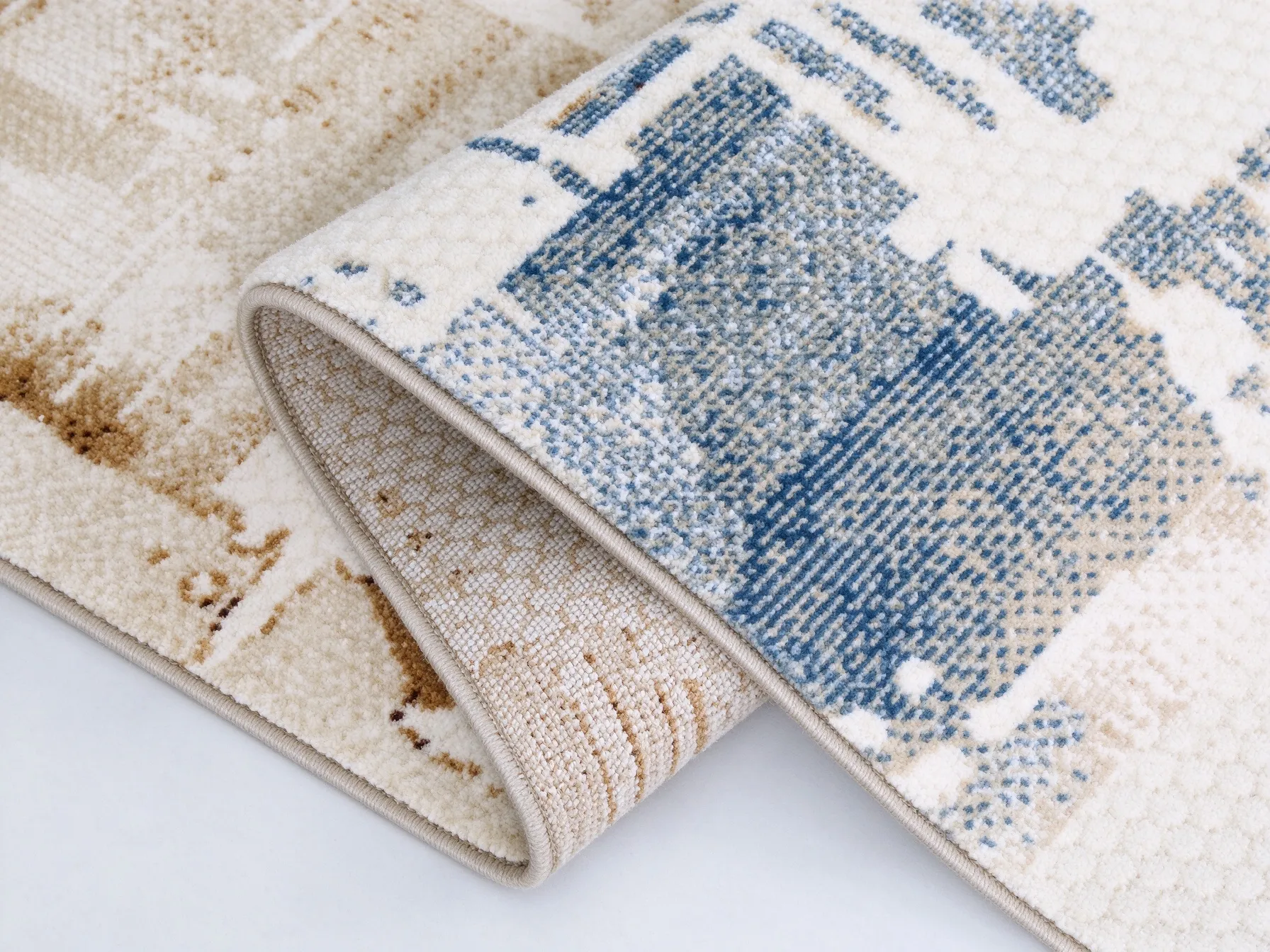
Reference piece from the abstract texture series: brushstroke pattern in beige, blue and earth brown. Sample approvals are always taken from the production material, not a screen proof.
Why the rug approval stalls while other finishes do not
Flooring, wall panels and joinery are usually specified early because they sit inside construction packages with fixed cut-off dates. Soft furnishings arrive later in the programme, so they inherit whatever time is left over. That creates three predictable problems on projects for villas, hotel guest rooms and lobbies:
- Too many reviewers, no named decision maker. Interior designer, client representative, operator and contractor all comment. Nobody owns the final yes, so the item returns to the table at every progress meeting.
- Approval against a picture instead of a physical sample. Abstract brushstroke texture in beige, blue and brown reads very differently on a phone screen and under site lighting. A decision taken from an image gets reversed when someone finally sees the pile height up close.
- Size and room of placement confirmed late. Once the rug size is tied to sofa layout and door swings, changing it changes furniture positions, which pulls other trades back in.
Our approach is to treat the rug as a scheduled submittal with one approver per question, exactly like a tile or panel sample. Below is the sequence we ask project teams to follow.
Step 1: name one approver for each decision
Before any sample leaves our factory, we agree in writing who answers which question. On a typical villa or hotel package this splits into four owners:
| Decision | Typical approver | Evidence required to approve |
|---|---|---|
| Pattern, colourway and texture direction | Interior designer or design lead | Physical sample of the chosen abstract pattern under the room's actual lighting |
| Material and construction for the setting | Client representative or operator | Product specification sheet plus a wear and cleaning note for the intended traffic level |
| Size, cut and placement in plan | Design lead with the contractor's layout person | Annotated floor plan showing furniture footprint and door swings |
| Budget, quantity and delivery window | Procurement or project manager | Quotation with sizes, standard versus custom dimensions and shipping terms |
This table is agreed in the first week, not at the approval meeting. Anyone who wants to comment may do so, but only the named owner can reject an item, and a rejection must state which of the four questions it applies to.
Step 2: shortlist from the room, not from a catalogue
We ask for three things before recommending a rug: the floor finish it will sit on, the daylight direction in the room, and how the space is used. A living room in a private villa and a hotel lobby corridor take the same abstract design language but not the same specification.
For low to medium traffic residential rooms, our polyester abstract texture range covers what most designers ask for: soft surface underfoot, stain resistance for daily spills, and a woven structure that resists shedding and colour loss. The neutral beige, blue and brown palette is deliberately quiet against stone, engineered oak flooring and pale joinery, which is why it keeps appearing in minimalist and light-luxury schemes rather than as a statement piece.
Where the brief asks for more sheen under lighting, we raise the modern luxury abstract polyester shiny silk area rug as a separate option in the same submittal pack. Its bright-silk surface reflects light differently, so it is judged on its own sample sheet rather than compared against a matte texture by eye.
Step 3: run one sample round, not four
Multiple sample rounds are the single largest cause of delayed soft-furnishing sign-off. We compress this by sending a complete pack in the first round:
- The selected pattern as a physical swatch, large enough to judge scale and pile.
- A written specification covering material, thickness and finish.
- Cleaning and maintenance guidance for the intended use.
- Two candidate sizes drawn on the client's own floor plan, not generic dimensions.
The pack goes to one recipient with a reply date. Comments are collected by that recipient and returned as a single consolidated response. We do not accept verbal comments passed through site meetings, because they never reach the production file.
Step 4: lock size and custom dimensions before production starts
Standard sizes are held in stock, and larger custom dimensions are supported for villa lounges, hotel rooms and lobby areas. The distinction matters commercially: a standard size can move quickly into dispatch, while a custom cut sits inside the production schedule and cannot be amended after cutting begins.
So the size sign-off is treated as a hard gate. At that point we require the final furniture layout, including sofa footprint, coffee table position and any door or sliding panel sweep. On open-plan villas we also confirm whether one large piece or two smaller pieces frame the seating zone, because that changes both cost and how the room reads after installation.
Where a project needs several rooms treated consistently, we place guest rooms, bedrooms and lounge areas on one purchase order with one pattern reference. Splitting them across orders is what produces visible differences between batches.
Step 5: coordinate the rug with the rest of the fit-out package
A rug approval only holds if the finishes around it hold too. Because we supply furniture and building materials together, we review the rug against the adjoining floor covering, wall panels and any acoustic or carpet and area rug work in the same package before production is released.
Two checks prevent most installation surprises:
- Threshold levels. Where the rug meets tiled or timber flooring, confirm the transition detail with the flooring contractor so edges do not lift in traffic lines.
- Acoustic expectation. Area rugs reduce footfall noise and add warmth underfoot, but they are not a substitute for an acoustic floor build-up. We state this plainly in the submittal so operators do not carry an assumption into their own technical review.
For hospitality packages we also confirm who receives and stores the rugs on site. Delivered textiles sitting in a damp or dusty store are the most common cause of damage claims at handover, and it is cheaper to agree storage responsibility during the approval stage than to argue about it later.
Step 6: one written sign-off sheet, then production is released
The final document is a single page listing pattern reference, colourway, material, dimensions, quantities per room, delivery address and the date each decision owner signed. Nothing enters production until that sheet is returned countersigned.
After handover we keep the same sheet as the reference for repeat orders and spare pieces, so a later phase of a villa or hotel matches the first one rather than being re-specified from memory by a new buyer.
Common approval failures and what they cost
| What goes wrong | Where it is caught | How we prevent it |
|---|---|---|
| Colour rejected after installation because site lighting differs from the showroom | Too late to change without re-order | Sample judged in the actual room, with a photograph of the swatch on the real floor recorded in the sign-off pack |
| Rug too small once furniture arrives, so it sits under the front legs only | Delivery day | Size signed off against the confirmed furniture layout, not an assumed one |
| Two rooms specified from images and delivered with visibly different tones | Handover inspection | One pattern reference and one production batch per project phase |
| Custom size requested after cutting started | Production line | Hard gate at Step 4; any later change is quoted as a new piece with its own lead time |
A short checklist to take into your next coordination meeting
- One named approver for pattern, one for material, one for size, one for cost.
- Physical sample judged on the actual floor covering, under the room's lighting.
- Furniture layout confirmed before any custom dimension is released to production.
- Transition detail agreed with the flooring contractor.
- Storage and receiving responsibility named for site delivery.
- Countersigned sign-off sheet filed as the reference for future phases.
If you are coordinating a villa, hotel or office package and want the rug submittal run as one controlled round rather than several, send us the floor plans, the adjoining floor finishes and your required dates. We will return a specification pack with pattern options, candidate sizes marked on your drawing and a single sign-off sheet for your approvers to confirm — then take the approved piece through production, delivery and installation under the same project reference.