
Where Can the Modern Pinecone Petal Pendant Light, a Multi-Layer Metal Chandelier for Dining Room and Hotel Lobby, Be Used in a Hotel or Villa Project?
Useful positions for this pendant in hotel and villa projects — and the coordination work that has to be settled before an order is placed.
Project teams usually decide on a decorative pendant early in the design process and then spend months reconciling it with ceiling structure, furniture layout, switching and delivery dates. The Modern Pinecone Petal Pendant Light is one of the more demanding pieces in our lighting range to coordinate this way: a pinecone-inspired form built from overlapping petal layers with a polished metal finish, giving off soft warm light through those layered shades. Because it reads as a sculptural object rather than a neutral fixture, it earns its place in a handful of specific locations — and looks out of place in others. This article sets out where the fitting works in hotel and villa projects, what has to be resolved before an order is placed, and how we supply it alongside the rest of the package.
What the pinecone petal pendant actually is
The product description on its page states the essentials plainly: a distinctive pinecone-inspired layered petal structure, a polished metal finish, and soft warm light emitted through overlapping shades, forming an elegant sculptural focal point for dining rooms, meeting areas, hotels and luxury interiors. Two consequences follow from that construction, and both shape where you can use it.
First, the layered petals create a textured silhouette that changes as you walk around it. It is designed to be seen from several angles, not just from directly below. Second, the overlapping shades diffuse rather than direct the light — flattering ambient illumination rather than a focused task beam. Neither point is a limitation if the location suits it; both become problems in the wrong room.
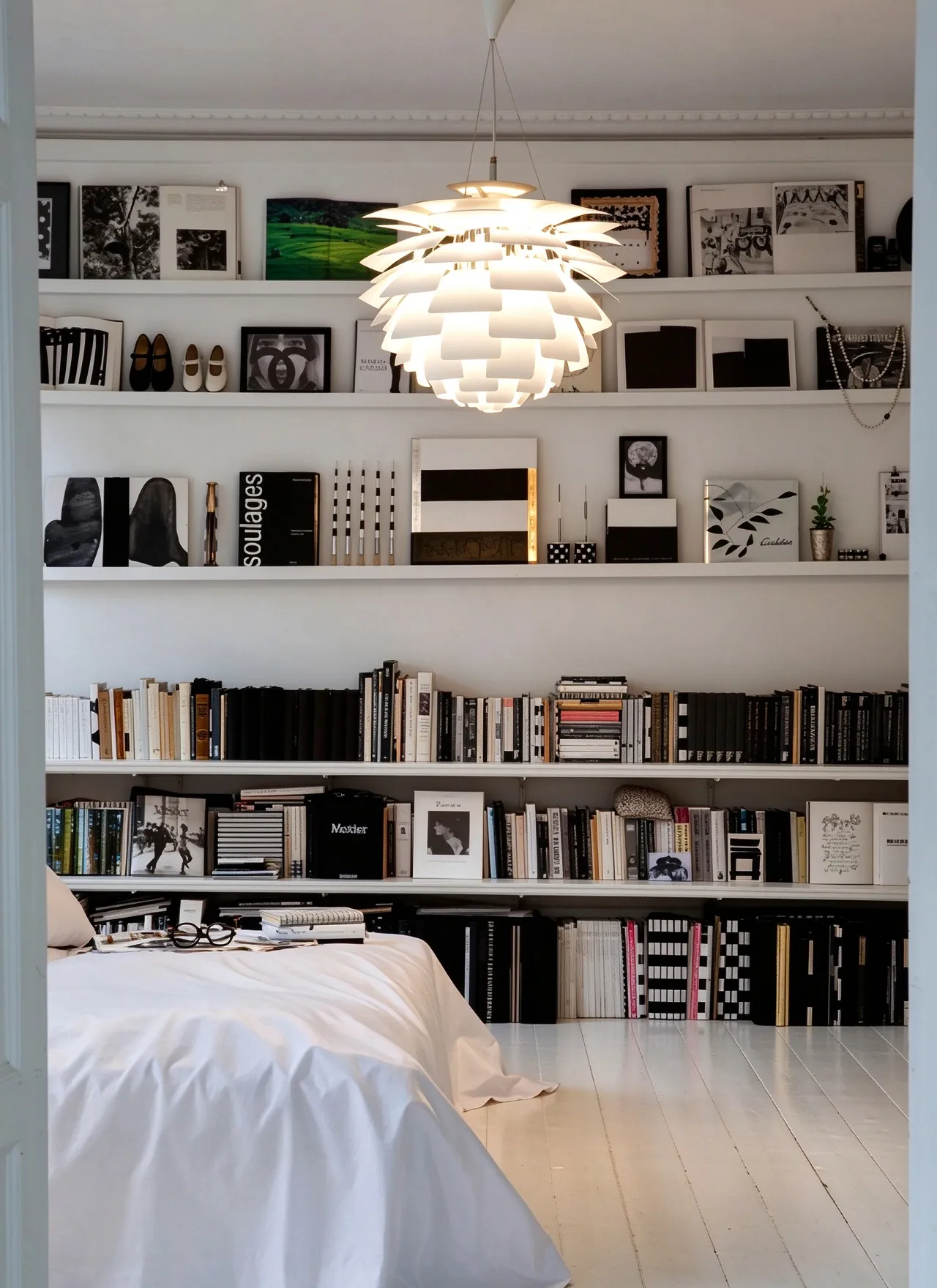
Multi-layer petal structure with polished metal finish, as catalogued in our lighting range.
Where the pendant works in a hotel project
Lobby and reception seating areas
A lobby is the strongest case for this type of pendant, precisely because the fixture is expected to be decorative. Guest arrival points are viewed from multiple positions — the entrance, the reception desk, the seating group, a lift lobby on an upper level — and a layered form rewards that. In practice we place these pendants over a defined zone rather than distributing them evenly across the whole floor: above the check-in counter, or as a cluster over a lounge grouping where the ceiling height allows the fixture to hang clear of seated guests.
For a smaller property without a formal lobby, the same logic applies to the arrival corridor or the desk wall. A single pendant marks the point where a guest enters and is easier to budget than a full decorative lighting scheme.
All-day dining and private dining rooms
Dining is the second natural home for this fitting, and it is named in the product's own description. Over tables, the warm diffused output from overlapping shades flatters both the tabletop and the people at it, while the petal layers give the room something to look at between services. Two practical points matter more than appearance here:
- Hang the pendant in relation to the table, not the ceiling grid. A fixture centred on an empty floor area with an off-centre table reads as a mistake immediately.
- Keep the bottom of the fixture clear of the sightline of seated guests across the table. Over a banquet or shared table, that usually means a higher hang than designers initially propose.
Meeting areas and boardrooms
The product copy lists meeting areas among its intended settings, and this is where the fixture needs the most careful judgement. A sculptural pendant over a boardroom table gives a meeting room character that recessed downlighting never will, and it photographs well for marketing material. The trade-off is that layered shades diffuse light rather than delivering an even task level across a written surface. In rooms used for note-taking or screen-based work, treat the pendant as atmosphere and specify separate general or task lighting to carry the working illuminance.
Corridors, lift lobbies and transition zones
Short corridors and lift lobbies are often lit entirely with functional fixtures that guests never register. A pendant marking the end of a corridor gives the floor a recognisable landmark, so guests orient themselves by the light rather than by signage. In these positions, size matters more than finish: an oversized fixture in a narrow circulation space crowds it, while a small one disappears.
Where the pendant works in a villa project
Dining room and kitchen island
In villas we most often specify this style over the dining table, with a row of two or three pendants where the table is long. The same hanging discipline applies as in a restaurant: proportion to the tabletop, clearance above seated heads, and switching that lets the fixture be dimmed independently of the room's general lighting.
Over an island, a layered metal pendant works well where the island is used for serving and conversation rather than food preparation. If the island is the primary prep surface, put the task light under wall cabinets or in the ceiling above the work zone, and let the pendant do the visual work.
Stair voids and double-height entrances
Double-height entrance halls and stair voids are where a sculptural pendant earns its cost in a private house. The vertical volume gives the layered form room to be read from the ground floor and from the landing above, which is exactly how this construction is meant to be seen. Where the void is narrow, confirm the swing or door clearance before fixing the hanging height.
Principal bedroom and dressing rooms
A pendant hung low over a bedside table, in place of a ceiling rose position, replaces a table lamp and frees the surface — which is where layered petal shades give their warm, diffused output its best use in a bedroom. In a dressing room or walk-in wardrobe, check that the fixture is clear of hanging garments and of an open door before committing to a drop length.
Where we would not use this pendant
Being honest about the poor fits saves a variation order later:
- Low ceilings in circulation areas. A layered pendant in a corridor with restricted head height becomes an obstruction rather than a feature.
- Task-critical workspaces. Kitchens' main prep zones, office desks and workshop benches need directed light, which diffusing petal shades do not provide.
- Externally exposed or wet locations. A polished metal decorative pendant belongs indoors. For covered terraces, loggias and poolside pavilions in our villa packages, choose products from the outdoor collections instead — see Outdoor Furniture for Villas and Resorts for the ranges intended for those settings.
- Rooms already carrying a strong decorative element. A patterned feature wall, a bold rug or a sculptural stair competes with a petal pendant. In our Custom Laser Cut Metal Screen projects, for example, the screen usually carries the pattern and the lighting should stay quieter.
Coordination checklist before you order the pendant
| Item to confirm | Why it decides the outcome |
|---|---|
| Ceiling height and finished level | Sets the maximum drop and whether the fixture clears heads, tables and doors. |
| Set-out relative to furniture | Pendants must align with tables, islands and seating groups, which are often moved after ceilings are set out. |
| Structural fixing and access | A multi-layer metal pendant has real weight; the fixing point and any ceiling lining need to carry it, and access is needed for lamp servicing. |
| Switching and dimming | Decorative pendants should be on their own circuit or dimmer so they can be set independently of general lighting. |
| Quantity and cluster layout | Clusters over long tables need identical production batches, so order quantity is fixed before manufacture starts. |
| Spares for handover | Hotels replace fixtures during operation; ordering spares with the original batch avoids a finish mismatch years later. |
Ordering this pendant as part of a wider package
Lighting rarely fails a project on its own; it fails through coordination with ceilings, furniture and delivery sequencing. That is the argument for ordering the pendant with the rest of the fit-out rather than separately. Our Turnkey Villa Furnishing service covers consultation, design, production, logistics, installation and after-sales support, so a decorative pendant sits on the same schedule as the joinery, flooring and loose furniture around it. Through our Custom & OEM Service, finishes and materials can be discussed against the project's palette rather than limited to a catalogue option.
The same range covers neighbouring positions in the same room, which keeps a scheme coherent: the Modern Crystal Ball Pendant Light for a brighter reflective accent, and the Modern Woven Mesh Pendant Light where a geometric shade suits a restaurant or lounge better than organic petals. The full range sits under Lighting Products, and the wider supplier scope across furniture, interior fixtures and building materials is described on our One-stop Solution page.