
A rug sample is the cheapest decision a project buyer will ever make, and the most ignored. On a villa or hotel schedule, finish samples for the floor textiles are often waved through by email because "the picture looked right". Then 200 pieces arrive, the pile catches light differently than the render showed, and the lobby floor reads dull instead of lustrous. This guide walks through exactly what to check on a finish sample for our Modern Luxury Abstract Polyester Shiny Silk Area Rug before you release production — the yarn, the pile height, the sheen level, the pattern scale and the size — so the piece that ships matches the piece your client approved.
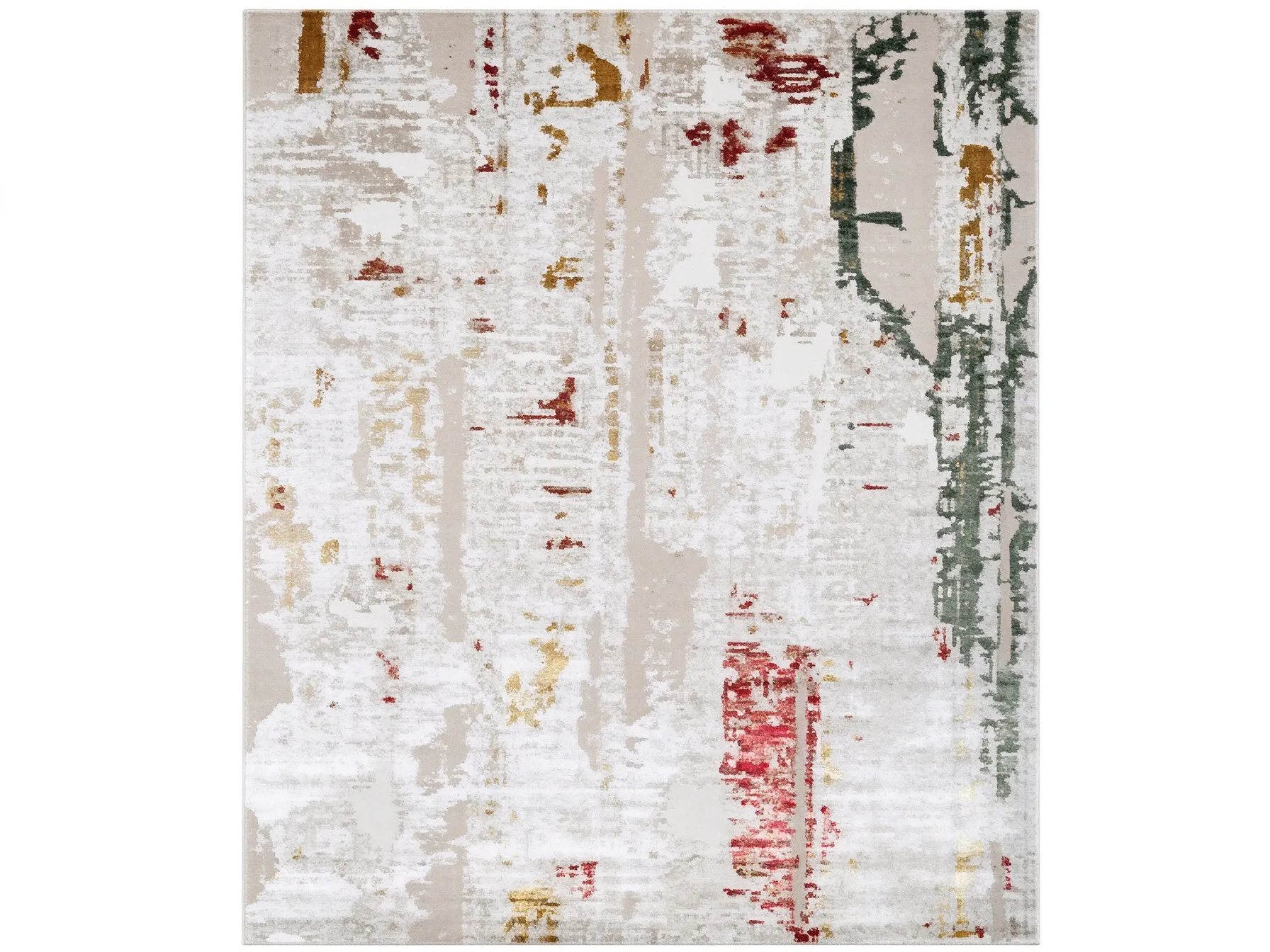
Modern Luxury Abstract Polyester Shiny Silk Area Rug — the sample you approve should be cut from the same construction shown here.
What "finish sample" actually means for this rug
For a woven textile, a finish sample is not a colour chip. It is a small swatch of the finished article: face yarn, backing, cut pile and printed or woven pattern together. That distinction matters because the three things people get wrong in review — how the surface reflects light, how dense the pile feels underfoot, and how the abstract pattern reads at full scale — can only be judged on the assembled product.
This particular rug is built from two polyester yarns working against each other: a bright silk yarn that carries the shine, and a shrink yarn that gives body and texture. The finished thickness is 12 mm. Those are the specifications published on the product page, and they are the numbers your sample should be checked against — not a similar-looking rug from another project.
If you are specifying for a hospitality or villa fit-out, this is also the moment to confirm whether the abstract pattern in the sample belongs to the family you designed around. We hold several abstract and classic pattern options in this construction, and the same colourway can look entirely different when the motif density changes.
Check 1 — The two yarns and the balance between them
The shine on this rug does not come from a coating; it comes from the bright silk yarn. So the first thing to do with a sample is look at the face under raking light — hold the swatch nearly flat to a window or a downlight and tilt it slowly.
- Bright silk yarn: does the gloss move smoothly as you tilt, or does it break into patchy bright spots? Smooth movement means consistent twist and even tension in the weave.
- Shrink yarn: this is what creates the subtle relief in the surface. Run your palm across the swatch — you should feel texture variation between the pattern areas, not a flat carpet with a shiny top.
- Ratio: if the sample looks glassy with no visible texture, too much bright silk is showing; if it reads matte, the shrink yarn is dominating. Say so in writing before production, because this balance is the one thing a buyer can never fix after the fact.
Do the same test on two corners and the centre of the swatch. Consistency across those three points tells you the weaving is stable — which is what makes this construction wear-resistant and slow to fade in normal interior use.
Check 2 — The 12 mm pile: measure it, don't eyeball it
Total thickness of 12 mm is a specification, not an impression. Use a simple calliper or a ruler with a straight edge pressed onto the surface, and read the pile at three spots on the sample. What you are protecting:
- Comfort underfoot. A rug at this thickness gives the soft step that a thin flatweave cannot, which is why it works in bedrooms, studies and villa living rooms.
- Noise control. Pile height and density are what dampen footfall — relevant in an upstairs villa bedroom or a hotel corridor with hard flooring either side of the rug.
- Furniture behaviour. A dining chair or a coffee table leg behaves differently on 12 mm than on 8 mm. If your furniture schedule assumes the rug sits under front legs, test that with the sample and a real leg.
Press a thumb into the pile and watch it recover. Slow recovery or a permanent dent in the swatch is a warning sign worth raising before an order, not after.
Check 3 — Sheen level against your lighting design
This is where most sample reviews fail, because the swatch was inspected under warehouse lighting. A shiny silk rug is a lighting decision as much as a textile one.
| Lighting condition | What to look for on the sample |
|---|---|
| Warm downlights (typical hotel lobby, 2700–3000 K) | The abstract pattern should show soft highlights along the motif edges. If the surface goes flat and grey, the sheen is too low for your scheme. |
| Natural daylight from a side window (villa living room) | Gloss should read as depth, not glare. Excessive mirror-like reflection means the bright silk proportion needs review. |
| Accent or pendant light directly above (dining area, reception desk) | Watch for hot spots. A small bright patch under a focused beam will scale into an obvious shiny zone across a large rug. |
Photograph the sample in each of those three conditions and send the photos back with your approval note, not just a verbal "OK". That record protects both sides when the full-size piece is delivered.
Check 4 — Pattern scale: the sample lies to you about size
A 30 cm swatch of an abstract design is not a small version of a 400 × 500 cm rug. The motif repeats, and at full width the same pattern can feel busy or sparse in a way it never did on the sample.
- Lay the swatch on your floor plan at 1:1 and mark where the motif's largest element would fall relative to the room's sightline from the doorway.
- Ask for the repeat dimension in writing, so you know how many motif cycles cross a 4 m width.
- Check the pattern's start point. On an abstract design, which part of the motif sits at the rug edge changes the whole composition once it is installed under a sofa.
- If your scheme calls for a calmer field, compare against a lower-contrast option such as our Modern Abstract Art Texture Polyester Area Rug, which uses beige, blue and earth-brown tones with a brushstroke texture rather than a high-gloss surface.
Check 5 — Size, edge finish and how it will be delivered
Standard sizes are available off the shelf in this construction, and large formats up to 400 × 500 cm are supported for villas, hotel lobbies and commercial floors. Confirm three things on the sample itself:
- Edge treatment. Look at how the bound or serged edge sits against the pile — a hard, thick border reads badly on a rug that is meant to look seamless under a bed or sofa.
- Cutting tolerance. Ask what deviation is acceptable on a made-to-size order and note it in your approval. A few centimetres matters at a doorway threshold.
- Roll direction. With a directional pile, the rug reads darker one way and lighter the other. Decide which direction faces the main entrance before production, and mark it on the sample backing.
For projects that mix rugs with wall-to-wall textile, review this piece alongside the broader carpet collection so the colourway and pile height are coherent across the specification rather than chosen item by item.
Check 6 — Cleanability and handover notes
The polyester face is straightforward to maintain: spills blot rather than soak, and routine vacuuming keeps the pile standing. Still, test it on the sample before you commit, because a hotel or villa operator needs a documented routine.
- Blot a small amount of water and leave it for a few minutes — then blot dry and check for a ring under raking light.
- Rub a white cloth across the surface and check for fibre transfer or shedding on the cloth.
- Ask for written cleaning guidance to include in your handover pack, and confirm what you should not use.
Getting this in writing at sample stage is what lets a facilities team maintain the sheen over years instead of dulling it with the wrong product in month two.
How the sample fits into our project workflow
Sample review is not an isolated step — it sits inside a defined sequence, so buyers know when to expect what:
- Brief and design proposal. Room, traffic level, lighting condition and the target look; we propose construction and pattern family accordingly.
- Quotation and detail confirmation. Size, pile specification, edge treatment, packaging and delivery terms are fixed here — this is also where a made-to-size order is priced.
- Production, shipment and follow-up. The approved sample becomes the reference the batch is checked against before packing.
Because we work as a one-stop furniture and building materials supplier, the rug sample is usually reviewed in the same round as cabinetry, wall panelling, lighting and flooring finishes. Reviewing them together under your actual site lighting avoids the classic mismatch: a glossy rug approved against matte joinery, both chosen under different lamps.
If your project needs a bespoke colourway or pattern rather than an existing design, our custom and OEM service covers material, finish and pattern development — and the sample stage is exactly where those decisions get locked down. Freight, packaging and door-to-door delivery are handled through our logistics service, so the approved reference travels with the order.
A few questions buyers ask at sample stage
Can I get a sample before committing to a large size?
Yes. A swatch of the finished construction is the normal first step, and it is what you should be signing off — not a photograph or a render.
Is 12 mm suitable for a hotel corridor?
Thickness alone does not answer that. Traffic level, cleaning routine and the flooring either side of the rug decide it. Tell us the location and footfall in your brief and we will confirm whether this construction is the right one or point you to a heavier option.
Can the pattern be matched to a fabric or artwork in the scheme?
Colourways and patterns can be developed through the custom service. Bring the reference material at brief stage, before the sample is cut, so the swatch reflects your actual target.
What if the delivered batch looks different from my approved sample?
This is why the approval note should record pile thickness, sheen behaviour under your lighting photos, edge treatment and pattern start point. Those records are what production is checked against before packing.
Approve the sample on paper, then release production
Six checks — yarn balance, measured pile height, sheen under your own lighting, pattern scale at full width, size and edge detail, and a written cleaning routine — take an afternoon with a swatch and prevent a floor-level failure on a villa or hotel handover. Sign off the reference sample against those points, keep the photographs, and let the batch be judged against that record.
Send your room dimensions, lighting condition and target pattern direction to our team, and we will cut a reference sample of the Modern Luxury Abstract Polyester Shiny Silk Area Rug for your project before production begins.