
A single line in a design brief — "sculptural pendant over the bar, light and shadow, not a conventional shade" — is where most lighting enquiries go wrong. The rendering sells the idea, the quotation comes back with something close but not quite right, and the fixture that arrives on site reads as flat under ceiling lights. This article walks through how we take that brief for a modern woven mesh pendant light and turn it into a quotation you can approve, in a form that purchasing teams, designers and contractors can all sign off on.
Start with what the brief actually has to survive
Before drawings or samples, get three answers down in writing. They decide whether a geometric hanging lamp works in your space at all:
- The room, not just the mood. A restaurant dining room and a residential living room impose different constraints on hanging height, clearances above tables and how much of the fixture is visible from the entrance. State both rooms if one product code covers several areas.
- The ceiling condition. Suspended grid, exposed slab, gypsum soffit or timber baffle — this determines what fixing plate, load path and cable anchorage we quote, and whether an electrical outlet needs to be relocated before the ceiling closes.
- The light you want on the surface below. A woven mesh shade made from thin cables does not light a room like a diffuser panel. It throws an illusionary pattern of overlapping lines that shifts as you move through the space, so the effect is strongest when there is a wall, tabletop or floor for it to land on.
If your brief calls for even, glare-free task light over a worktop, say so plainly. We will tell you where this type of open mesh shade is the wrong answer and propose a different fitting from the same lighting range instead of quoting something that disappoints on site.
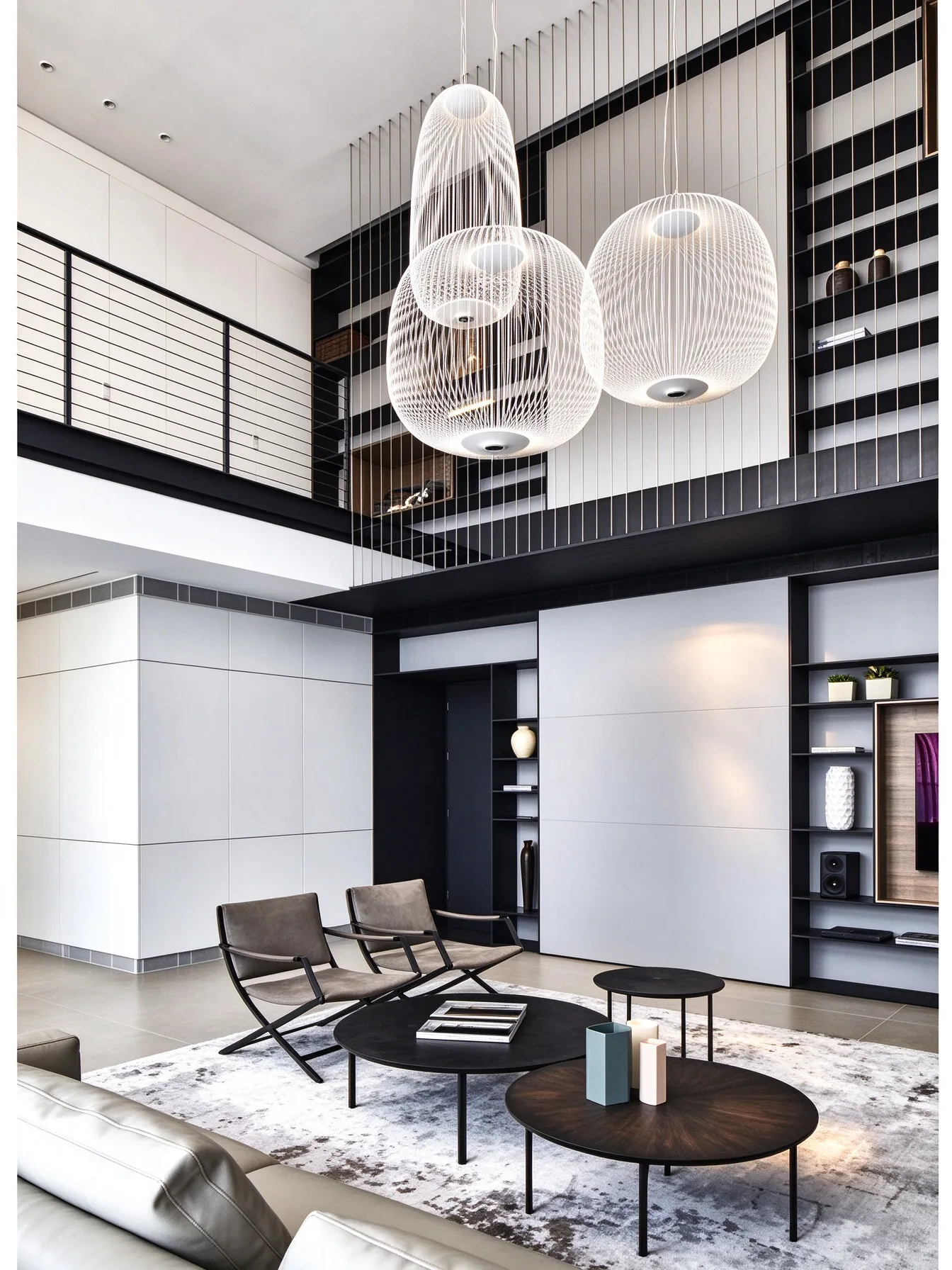
Geometric mesh shade formed from thin cables, producing layered real and virtual shadow patterns.
The five decisions that fix the price and the lead time
For a creative geometric shade hanging lamp, these are the variables we ask you to confirm. Each one changes tooling, packing or shipping volume, so pinning them down early is what stops an enquiry from stalling in review.
| Decision | What to specify in the brief | Why purchasing cares |
|---|---|---|
| Form and size | Multiple shapes are available for this family. Give the diameter or width, overall drop from ceiling to shade bottom, and the clear height you need above a table or counter. | Oversize shades ship as low-density volume, not weight. Knowing the dimensions lets us quote cube-based freight rather than an estimate. |
| Colour and finish | Colours are selectable. Name the reference you want against a physical sample, not a screenshot — mesh colour reads differently against a dark ceiling than against white. | A named finish removes the re-quote loop and lets non-standard colours be costed at quotation stage instead of after order confirmation. |
| Cable length and suspension | Ceiling height, plus whether the pendant hangs singly, in a cluster over a bar run, or in a row above banquet tables. | Adjustable cable lengths are cheaper to allow for at production than to alter on site with an electrician on the clock. |
| Light source and control | Wattage target, colour temperature (warm or neutral), dimming method, and whether the driver sits in the canopy or must be remote. | Dimming gear is usually bought locally. Confirming the control protocol early avoids a fixture arriving that will not talk to your existing dimmer. |
| Quantity and phasing | Total count, plus which areas are needed first. Minimum order quantities are flexible for custom work, but batching by area keeps the site programme moving. | Splitting one large order into two shipments changes freight cost; deciding this at quotation avoids a change order later. |
How the enquiry moves from brief to production
Our workflow for custom and OEM lighting follows the same sequence as our wider furniture and building materials work: a project brief and design proposal, then quotation with detail confirmation, then production, shipment and follow-up. For this pendant family that looks like:
- Brief review. You send drawings, photographs of the ceiling condition, and the room dimensions. We come back with questions before we quote — usually about fixing points and control gear.
- Specification sheet. A written spec covering shape, size, finish, cable arrangement, lamp output and packing method, issued for your counter-signature. Anything not on that sheet is treated as an assumption.
- Sample stage. Where the finish or mesh density carries design risk, we produce a sample so you can see the shadow pattern in real light before committing to volume. This is the step most worth protecting in your programme.
- Production and QC. Batch production with inspection against the signed spec sheet, including shade geometry, finish consistency between units, and lamp function test.
- Packing and freight. Open mesh shades are bulky and easily dented, so they are packed in rigid cartons with edge protection. We arrange sea, air or rail freight with the customs paperwork, and can deliver door to door.
Because we also supply the wider lighting range — ceiling, wall, floor and pendant fixtures — a restaurant or villa package can be coordinated on one set of drawings and one shipment rather than five separate suppliers' deliveries landing out of sequence.
What to put in the enquiry email
Send these seven items and you will normally get a usable quotation without a second round of questions:
- Project name, location, and the room or area each pendant serves.
- Ceiling type and clear height, with a photo if the ceiling is not yet finished.
- Quantity per area, and which areas are needed first.
- Target diameter and drop, or a marked-up reference image of the fixture you have in mind.
- Preferred colour or finish, plus colour temperature and dimming requirement.
- Your required delivery date on site, and your preferred port or delivery address.
- Who signs off the sample — designer, contractor or owner. Naming that person prevents a two-week silence mid-programme.
Pairing the mesh pendant with other fixtures in the same room
A woven mesh shade works best when it is not alone. In dining rooms and hotel lobbies we often specify it alongside a more solid sculptural piece — for example a multi-layer metal pendant over the reception or main table, with the open mesh fixtures used where you want movement and shadow rather than a single bright focal point. Keep one dominant form per sightline; two busy shades in the same view cancel each other out.
For living rooms, the practical question is scale. A large-diameter mesh pendant reads well over an open-plan lounge with high ceilings, but in a standard-height room it can feel heavy. When the ceiling is low, cluster two or three smaller shades at staggered drops instead of one oversized piece — same visual effect, less bulk at eye level.
Send us the brief
SANTERSON is a China-based furniture and building materials manufacturer supplying project packages for villas, hotels and offices. Share your drawings, quantities and target dates and we will return a specification sheet and quotation for review.
Contact: PHILLIP | Phone / WhatsApp: +86 139 2821 4007 | Email: santerson@qq.com | Enquiries: santerson.com/contact