
A set of classic folding doors can quietly decide how a room reads. Open, it links a dining room to a study or a pantry to a butler's kitchen; closed, it reads as part of the wall. Sourcing them direct from an overseas manufacturer is usually the only way to get the panel profile, finish and opening width your drawings actually call for — but doors are unforgiving items to buy at a distance. A leaf rebated wrongly or a track set out of level cannot be put right with a return label. This guide walks through what to specify, what to ask a factory for, and how to keep the order from arriving as a problem.
Why buyers go direct for classic folding doors
Local joinery shops can build folding doors, but the price rises quickly once you move away from a standard size and a painted MDF panel. Going direct to a China-based manufacturer changes the equation in three ways:
- Made-to-measure becomes normal, not an upcharge. Our Classic Folding Doors are produced to the dimensions of each opening rather than picked from a size chart, which matters when you are working to existing site conditions on a renovation.
- Finish can be matched to the rest of the joinery package. Material and finish options are specified per project, so folding doors can follow the same veneer, lacquer or panel profile as your wardrobes, sideboards and cabinetry instead of arriving as an unrelated item. Under our Custom Furniture Manufacturer service, an unusual moulding profile or a specific veneer is treated as a development item rather than something you have to accept from the standard range.
- One supplier covers more than the doors. Doors sit in the same shipment as wall panelling, flooring, wardrobes and kitchen cabinets, which is one less coordination problem on site.
Step 1 — Fix the opening before you ask for a price
Every quotation problem we see on doors starts with incomplete opening information. Before you send an enquiry, confirm these on site or from the setting-out drawings:
- Clear opening width and height, measured at several points, not taken off a scaled plan.
- Floor finish level — the threshold detail depends on whether the floor covering is already laid or still to come.
- Wall build-up, especially for framed openings in studwork, and whether a header is available to carry the track.
- Number of leaves and folding direction — bi-fold pairs fold differently from a four- or five-leaf set, and the stack position determines where furniture can sit.
- Whether an intermediate post is required, which changes hardware loading and the leaf widths.
Send the same information for every opening in the package. Doors quoted one by one are quoted as samples; doors quoted as a set with a schedule come back as a project price.
Step 2 — Decide what "classic" means for your project
Classic is a broad word, and a factory will read it differently from a designer. Pin it down in the specification sheet: the number and proportion of field panels per leaf, the moulding profile, the stile and rail widths, and the finish system. A painted panel door with a two-panel layout reads completely different from a reeded or fluted design, even at the same size.
It also helps to look at the door next to the rest of the openings in the job. If the same villa uses Classic French Double Doors on the terrace and Classic Panel Hinged Doors in the corridors, the folding set should share their panel language rather than introduce a fourth profile. Where a room needs the opening to vanish entirely, Classic Pocket Doors are often the better answer — they slide into the wall cavity instead of stacking in front of it, at the cost of some framing work.
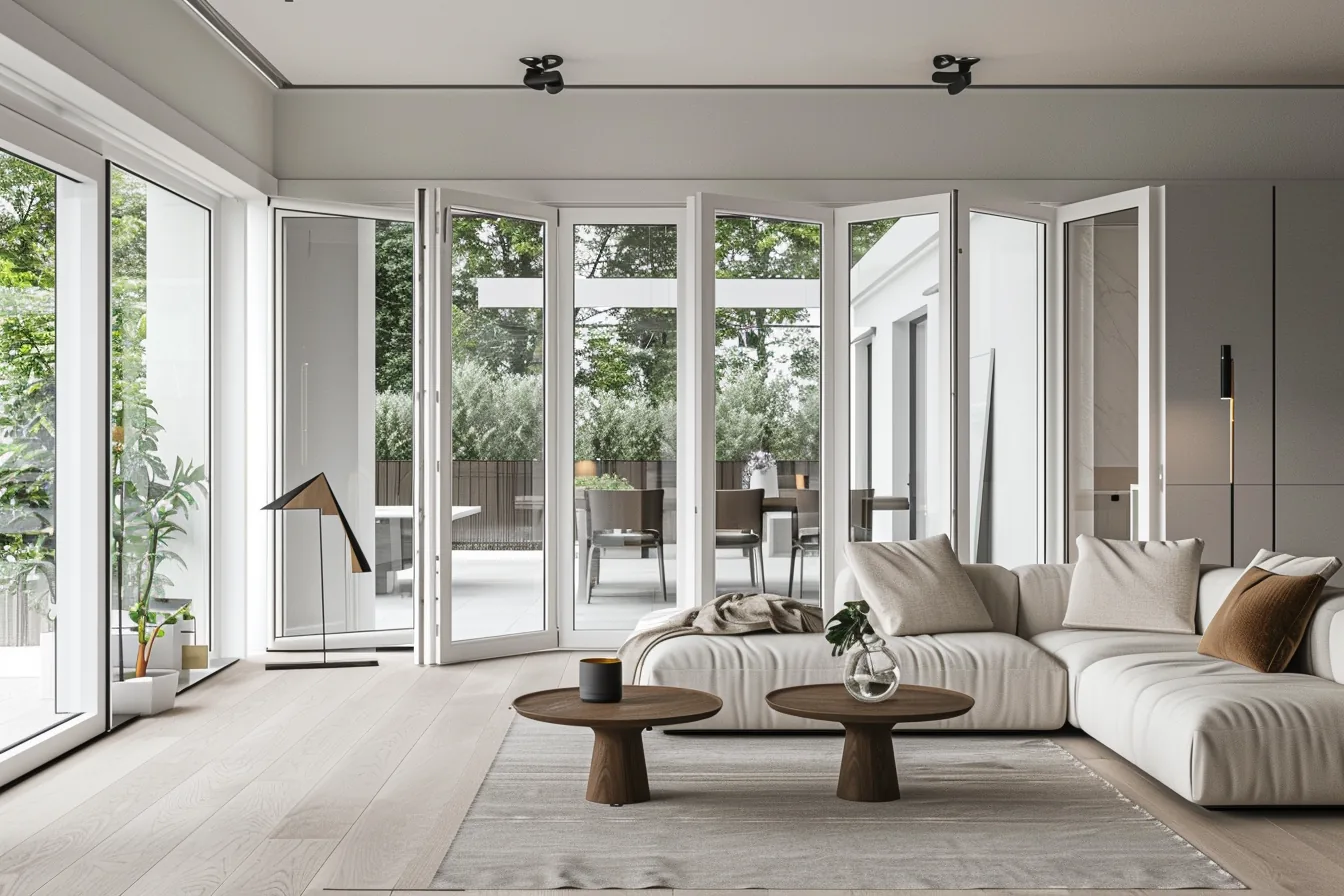
SANTERSON Classic Folding Doors — made-to-measure sizing, material and finish options, layout tailored to the project.
Step 3 — Ask the manufacturer these questions
| Ask about | Why it matters |
|---|---|
| Leaf construction and core | Tells you how the door resists warp across a tall leaf, and whether a veneered face is laid up on a stable substrate. |
| Hardware set included or separate | Track, wheels, pivot, bottom guide and handles are sometimes quoted separately. Confirm what ships in the box. |
| Maximum leaf width and height | Determines whether your opening needs an intermediate post or a heavier track. |
| Finish system and colour reference | Paint code, sheen level and veneer species should be stated in writing, with the reference you supplied attached to the order. |
| Sample or first-article approval | A small profile-and-finish sample costs little and prevents a whole package coming back wrong. |
| Packaging and crate marking | Each set should be marked to its opening number so installers on site are not guessing. |
| Spare parts and adjustment range | Ask what is available later for wheels and guides once the project has been handed over. |
If your drawings also call for concealed or flush openings, ask about them in the same enquiry. Flush Wall Aligned Doors and folding sets need different wall details, and settling both with one supplier means one coordinated framing schedule rather than two competing ones.
Step 4 — Control the sample stage properly
With doors, the sample is not a brochure item — it is the reference for the whole package. At minimum, request:
- a moulding and panel profile section in the specified finish;
- a finish board in the actual colour or veneer, viewed in your own site lighting;
- written confirmation of leaf thickness, stile widths and hardware make.
Sign off that sample physically — a signature and date on the sample card, photographed and returned to the factory. Production released against an email approval is production released against nothing.
Step 5 — Freight, sequencing and installation
Doors are heavy, flat and easily damaged at the edges, so they travel badly when mixed carelessly with loose furniture. Two practical rules:
- Order doors once the wet trades are close to finished. Plasterers and painters damage unfinished joinery on site more often than transit does, and a folding set stored in a corridor for weeks rarely reaches handover in good condition.
- Consolidate with the rest of the built-in package. Folding doors, wardrobes, vanities and cabinetry moving as one container reduces handling and gives you a single delivery window to plan around.
Send your door schedule, opening dimensions and finish references with the first enquiry; a complete enquiry usually comes back with a usable quotation rather than a list of further questions. Where the project needs it, Furniture Installation for Interior Projects can be arranged as part of the same scope, so the party that built the doors is also accountable for fitting them.
Sourcing Classic Folding Doors from an overseas manufacturer is not a risk problem, it is a documentation problem. Specify the opening, lock the sample, and put the doors in the same shipment as the joinery they have to match — and the distance stops mattering.