
A slatted aluminium dining set and an adjustable sun lounger travel well because they are light and largely weatherproof. That is exactly why packaging mistakes survive arrival so easily: a frame that shrugs off rain will not shrug off a crushed carton corner, a loose lounger mechanism, or a stack of slat panels sliding against each other in a container. Before you approve production on the Aluminum & Teak-Look Slat Outdoor Dining Set & Adjustable Sun Lounger, ask your supplier to put the packing plan in writing. The five confirmations below are the ones that decide whether the goods land ready for installation or become a claim.
1. Confirm how the lounger mechanism is protected, not just the frame
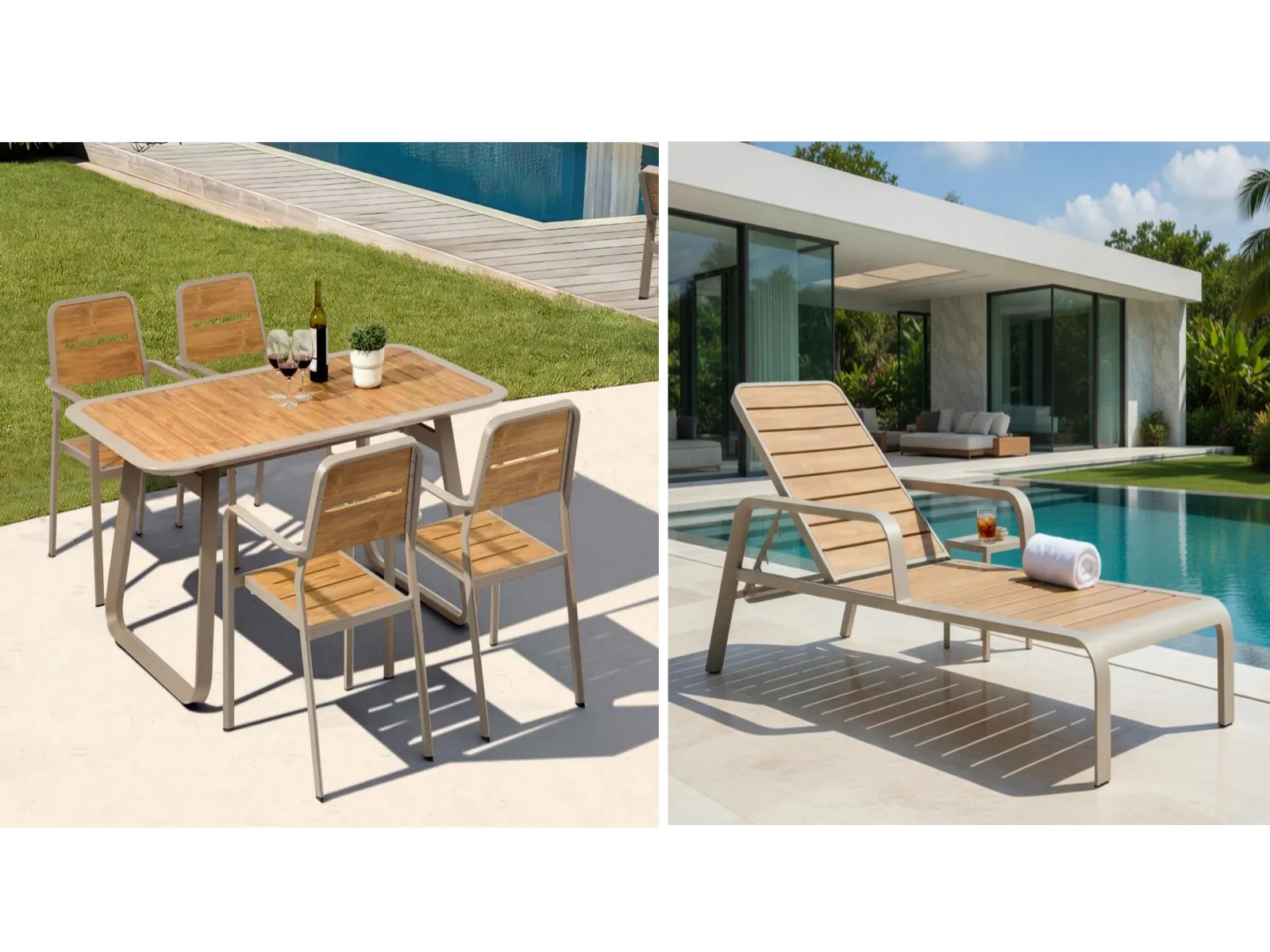
Aluminum & Teak-Look Slat Outdoor Dining Set & Adjustable Sun Lounger — the slatted tops and reclining lounger are the two surfaces that need packing detail.
The lounger in this collection reclines through several positions, and the recline hardware is the part most likely to be bent or jammed in transit. Ask for a written packing description that states where the backrest sits during shipment (locked in one position or fully detached), whether the frame sections are separated and bolted on site, and what separates moving parts from static ones. If the mechanism ships assembled, ask what blocks it from flexing inside the carton when the package is lifted or dropped.
Request a photograph of the packed lounger before the goods leave the factory. One photo of the actual palletised load tells you more than any paragraph of promises, and it becomes your reference point if damage appears later.
2. Confirm how the teak-look slat surfaces are separated and faced
The appeal of this collection is the textured, wood-look finish on the slats — a finish chosen precisely so it does not need the sanding and oiling that solid timber demands. Scratches and abrasion marks are therefore highly visible against a deck or pool surround. Confirm in writing:
- whether slat tops travel attached to the frame or as loose panels packed separately;
- what interlayer material sits between stacked surfaces (foam sheet, corrugated board, corner protectors);
- which face of each panel is exposed in the stack, and whether finished faces touch one another;
- whether edges and corners get protectors, since a dented slat edge cannot be sanded out the way timber can.
For hospitality orders, ask whether the supplier can pack in room-by-room or zone-by-zone sets. Pool-deck deliveries go far faster when one bundle equals one layout rather than one bundle equals twelve mixed cartons.
3. Confirm carton construction, stacking and the printed marks
| Item to confirm | What a clear answer looks like |
|---|---|
| Board grade and ply | A stated grade for export cartons, or plywood crates for the lounger frames — not “standard packing”. |
| Pieces per carton | Exact contents list per carton, so your receiving team can check counts without opening everything. |
| Maximum stack height | A stated stacking limit and whether cartons are palletised or floor-loaded in the container. |
| Container loading plan | How many sets fit a 20ft or 40ft container, and how the load is blocked and braced. |
| External marks | Carton marks matching your purchase order and project reference, plus handling symbols on the fragile-surface bundles. |
| Moisture protection | Inner lining or desiccant where finishing surfaces are packed, especially for sea freight. |
Marks matter more than most buyers expect. On a resort site with indoor and outdoor deliveries arriving in the same week, an unmarked carton is a carton that gets dropped in the wrong building.
4. Confirm what arrives loose and who assembles it
Flat-packed aluminium frames cut freight cost, but they move work to your side of the transaction. Get a written split: which components ship assembled, which ship loose, whether hardware is pre-fitted or bagged separately, and whether tools are included. Then confirm whether assembly sits with your team, the site contractor, or under the supplier's installation and after-sales support. Confirming this before production prevents a finished pool deck sitting unassembled while someone decides who owns the task.
Ask for an assembly sheet per item, in English, with the fixing list on it. For a project of any size, that sheet also becomes your maintenance and spare-parts reference after handover.
5. Confirm the documentation and the damage process before shipping
Outdoor furniture for a project rarely clears customs as a friendly single parcel. Ask which documents accompany the shipment — commercial invoice, packing list, certificate of origin — and confirm that the carton quantities on the packing list match what your receiving team will actually count. Mismatched counts cause inspection delays nobody pays for.
Then agree the damage procedure in advance: how quickly you must report with photographs, who files with the carrier, and what replacement parts ship and when. A supplier willing to write this down before loading is a supplier who has packed these sets before. If that conversation produces vague answers, change the packing specification now — it costs nothing at that stage and everything after the container seals.
A practical sequence: request the packing specification in writing with your quotation, not after production; ask for a photo of the packed load before shipping; and put the assembly responsibility split into the order confirmation. Those three steps cover most of the risk in outdoor furniture procurement.
Related collections to pack on the same plan
If your project also specifies other slatted aluminium pieces, apply the identical surface-protection and marking requirements across them so receiving is consistent. See the L-Shaped Aluminum Outdoor Corner Sofa Set with Teak-Look Slat Tops and the Aluminum Sling Sun Lounger Collection, Multiple Frame Designs with Adjustable Backrest, both of which share the same recline-hardware and finished-surface handling concerns. Our wider outdoor furniture for villas and resorts range is packed under one coordinated plan when ordered together, which is where consolidated container loading pays off most.
Send us your set configuration, delivery address and receiving conditions, and we will return the packing specification, carton list and container loading plan with the quotation — so you approve how the goods travel before they are built. Custom frame colours and table dimensions are available for hospitality projects.