
A sculptural ceiling fixture is easy to fall for at sample stage and hard to explain at procurement stage. It arrives late, it has no line item, and the electrician needs a fixing detail that nobody drew. This guide walks through how the Modern Wavy Ceiling Light is specified and carried into a whole-project materials schedule, so the dining room and bedroom fixtures land in the same package as the joinery, flooring and wall finishes instead of becoming a separate purchase order at handover.
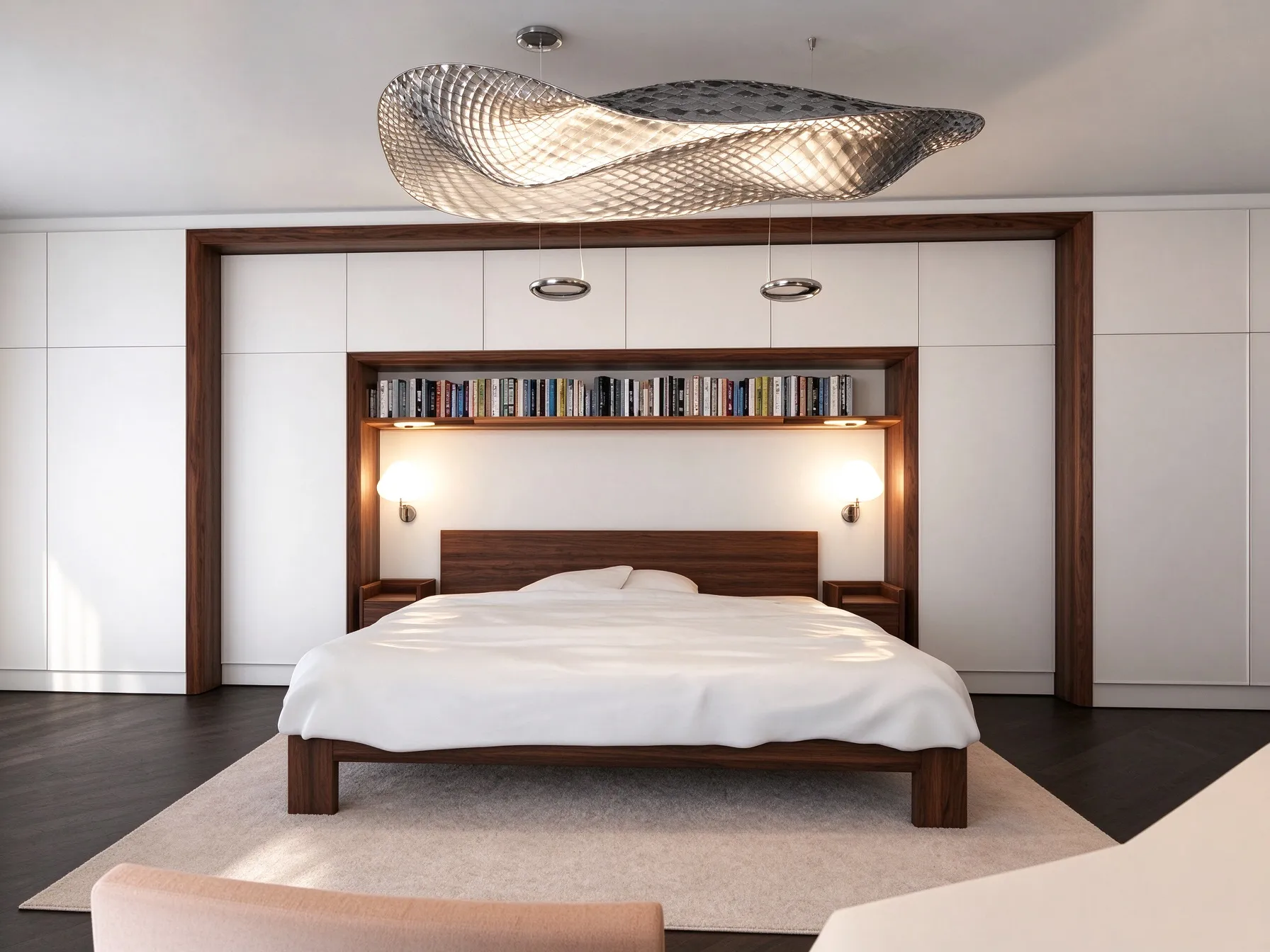
Undulating wave-form body with a mesh-like metal surface and integrated LED strips, shown as a dining room centrepiece.
Why the fixture belongs in the schedule, not the finishes allowance
Statement lighting is usually handled as a shopping task: someone likes a shape, buys it late, and hopes the ceiling opening fits. That works for a single apartment. On a villa or hospitality package with repeated room types, it creates three problems at once. The fixture is not priced in the bill of quantities, so it eats contingency. It is not on the long-lead list, so it lands after the ceilings are closed. And because its body shape and mounting detail are not drawn, the ceiling reinforcement and the driver location get decided on site.
The Modern Wavy Ceiling Light, Sculptural LED Flush Mount for Dining Room & Bedroom is a product that rewards early scheduling. Its appeal is a form, not a standard part: an undulating wave-shaped body with a mesh-like metal surface and integrated LED strips. Forms like this are made to order rather than pulled from stock, and they need a coordination line in the drawings before the ceiling is set out.
Scheduling it means giving it the same treatment as cabinetry or stone: a row in the materials schedule, a dimensioned setting-out reference, a named supplier, and a place in the production and shipping plan. Everything below follows that logic.
Read the product before you write the line item
The catalogue record for this fixture describes an artistic form that produces soft ambient light and reads as a visual centrepiece in dining rooms, bedrooms, lobbies and contemporary interiors. Two words in that description drive the whole specification.
- Sculptural. The object is seen from bed level, from the dining table and from the doorway. Its finish and silhouette matter as much as its light output, so it gets reviewed with the interior finishes rather than signed off by the electrical contractor alone.
- Flush mount. The fixture sits against the structural soffit instead of hanging on a chain. That puts the fixing detail, the ceiling level and any recess or bulkhead into the ceiling build-up, which is a joinery and ceiling coordination task, not a wiring task.
Integrated LED strips also change who you are buying from. There is no lamp to swap and no standard fitting to substitute at the last week; the fixture itself is the luminaire. Where an identical replacement may be needed years later on a hotel or rental portfolio, the schedule should carry the supplier contact alongside the model reference.
A five-column line that survives review
Most materials schedules collapse because they record only a name and a quantity. For a made-to-order sculptural fixture, use these columns so the row can be priced, ordered and installed without another meeting.
| Column | What goes in it for this fixture |
|---|---|
| Location and room type | Dining room, principal bedroom, secondary bedrooms, lobby or corridor feature. Name the room type, not just the level, so repeated units are counted once. |
| Reference | The catalogue page for the Modern Wavy Ceiling Light plus your internal item code. Keep both, so a reviewer can open the source and the site team can quote the code. |
| Form and finish note | Wave-form body, mesh-like metal surface, integrated LED strips, flush-mounted. Note any finish or size variant confirmed for the project. |
| Quantity by room type | Count from the room schedule, not from a lighting legend drafted before the furniture layout was fixed. |
| Coordination owner and status | Who confirms setting-out against the bed and dining table position, and who signs off the ceiling fixing detail. Mark each row as pending, approved or ordered. |
Practical note. Technical values such as wattage, lumen output, colour temperature, driver type and mounting hardware are not part of the published catalogue description for this item. Confirm them in writing with the supplier against your current order before the row is marked approved, and check them again against local electrical requirements at the project location. Do not carry assumed figures into a bill of quantities.
Set it out against the furniture, not the ceiling grid
A sculptural flush mount over a dining table is judged by its relationship to the table and chairs, and in a bedroom by its relationship to the bed headboard. Two coordination points are worth resolving on paper.
Dining room
Fix the table length, seating count and any extendable or rotating top before the ceiling setting-out is drawn. A fixture centred on a ceiling grid can sit off-centre on the table once furniture arrives. If the plan shows a bulkhead, cove or acoustic panel above the dining zone, decide whether the wave-form sits inside that zone or clear of it, and record the decision in the row.
Bedroom
Confirm the bed size and headboard width first, then place the fixture so it reads correctly when viewed from the bed and from the wardrobe run. Where wardrobes or wall panelling are part of the same package, check that the fixture silhouette is not cut off by a door swing or a tall cabinet line.
Group it with the rest of the fit-out to save a shipping cycle
The reason a whole-project materials schedule pays for itself is consolidation. SANTERSON works as a furniture and building materials manufacturer and one-stop supplier, with product spanning lighting, engineered wood flooring, decorative wall panels, aluminium ceiling and cladding systems, kitchen cabinetry, wardrobes, bathroom ceramics and outdoor furniture. When the statement light is scheduled in the same pass as those items, one specification covers several trades.
For a villa or guest-room package, grouping usually means:
- ceiling feature lighting reviewed together with ceiling panels and wall panelling, so junctions are drawn once;
- bedroom and dining fixtures counted alongside joinery, wardrobes and vanities in one room-by-room schedule;
- flooring, rugs and soft furnishings checked against the light's metal surface for tone, since a warm metallic finish reads differently over pale oak than over a dark stained board.
Where a project needs a variant form or finish to match an interior concept, that request goes through the supplier's custom and OEM service, which covers bespoke design and prototyping and custom material finishes. Raise it as a schedule change with a date, not as an email to a sales inbox.
Put the fixture on the long-lead list
Made-to-order items move through design confirmation, production, quality control and then freight. The logistics and door-to-door delivery service covers freight forwarding by sea, air and rail, customs paperwork, packaging and container loading, shipment tracking and delivery to site. Two scheduling consequences follow.
- Choose the transport mode in the schedule. Sea freight suits consolidated fit-out shipments; air suits a small number of fixtures needed before an inspection date. Record which option is priced so the choice is not made under pressure later.
- Order ceiling-dependent items together. If the light, the ceiling panels and any bulkhead joinery arrive in separate consignments, the ceiling gets closed while one item is still at sea.
Import terms, duties and delivery scope are project-specific. Confirm them for the destination country with the supplier and your customs agent rather than assuming a standard arrangement.
Close the row at installation and handover
The schedule is only finished when each fixture row has an installed status. The installation and after-sales support service covers on-site installation, inspection and snags, warranty coverage, spare parts or replacement, and ongoing maintenance. Response-time claims published on the site are not independently verified, so record the terms that apply to your order in the schedule itself.
For each room type, close out with:
- a signed-off setting-out position against the furniture layout;
- a snag list for finish damage after other trades worked below the fixture;
- the supplier reference and order number kept in the handover pack, so a future replacement or matching addition can be sourced without re-specifying from photographs.
Frequently asked questions
Can the same fixture serve both dining room and bedroom?
Yes, the catalogue positions it for dining rooms, bedrooms, lobbies and contemporary interiors. Keep them as separate rows by room type if size or finish differs, since a form that suits a dining zone may be too dominant over a bedside area.
Should lighting be scheduled separately from furniture and finishes?
Not when the fixture is part of the interior composition. Scheduling it with flooring, wall panels, cabinetry and soft furnishings keeps one person accountable for tone, setting-out and delivery timing across all of it.
What do I confirm before marking a row approved?
Room-by-room quantity, confirmed form and finish, the technical values supplied in writing for your order, the ceiling fixing detail, and the freight option with its cost. Anything missing from that list becomes a site variation.
Next step
Open the Modern Wavy Ceiling Light, Sculptural LED Flush Mount for Dining Room & Bedroom page, copy its reference into your materials schedule using the five columns above, and send the room-by-room quantities with your drawings for confirmation. For questions about a specific project, contact SANTERSON.