
A sculptural floor lamp can define the arrival moment of a lobby or anchor a villa living room, but buying one for a project is not the same as buying one for a home. When the specification calls for a piece such as our Modern Glass Column Floor Lamp - LED Ring Standing Lamp for Living Room & Lobby, buyers have to settle dimensions, glass and metal finishes, driver access, packaging and freight in one decision chain. This article explains how OEM sourcing works for that lamp type, step by step, from the first drawing to handover on site.
What OEM Sourcing Means For A Decorative Floor Lamp
OEM (original equipment manufacturer) sourcing means the factory builds the lamp to your documentation rather than shipping a fixed catalogue item. In practice it sits on a spectrum, and most lighting enquiries land in one of three places:
- Catalogue purchase. You order the standard configuration shown on the product page. Fastest route, no tooling changes, useful for a small number of pieces or a first installation.
- Light OEM (finish and dimension changes). The structure stays as engineered, but you change glass tone, metal colour, ring spacing, cable length or overall height. This is the most common request from interior designers matching an existing palette.
- Full custom development. New column geometry, new ring layout, new base engineering and a prototyping cycle before any production run. Appropriate when the lamp appears in a rendering that must be reproduced exactly, or when a hospitality brand wants a signature piece.
The reference product is built from transparent glass columns and illuminated LED rings, forming a vertical, sculptural structure with a glass-and-metal finish. That construction matters for OEM work: glass columns and metal framing are handled by different processes, so a change to one of them usually ripples into the other.
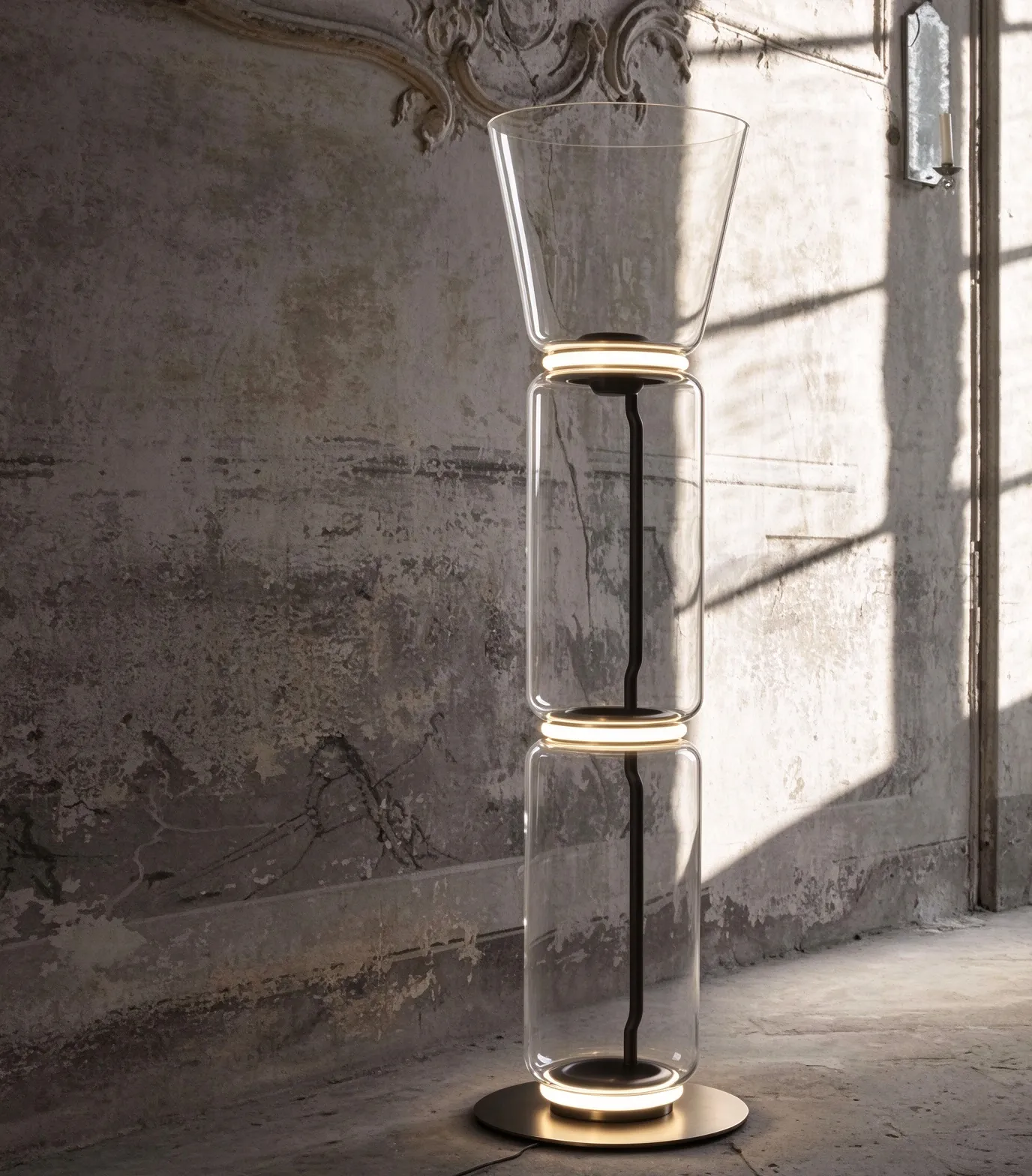
Glass columns and repeated LED rings create the vertical silhouette that OEM changes have to preserve.
Step 1: Share The Render, Not Just A Product Name
The most expensive mistakes in lighting procurement come from a purchase enquiry that contains only a model number. Before any quotation is meaningful, send the drawings or renders that show how the lamp is used: ceiling height beside it, adjacent furniture, whether it stands free or sits against a wall, and how many pieces the schedule requires. For lobby work, also state whether the lamps are grouped in a cluster or placed singly at each seating island, because grouping changes both the quantity break and the spare-parts plan.
If you are working from an inspiration image rather than your own drawing, say so plainly. A factory can usually tell you within one round whether the piece is a finish change on an existing structure or a genuinely new development, and that answer sets your budget band before you commit design time.
Step 2: Lock The Specification Sheet
A single specification sheet should carry every decision, signed off by the designer and the purchaser together. For a glass-and-LED standing lamp this is what belongs on it:
| Item | What to decide | Why it is hard to change later |
|---|---|---|
| Glass column | Diameter, height, clear or tinted, edge finish | Glass is cut and handled per size; a new dimension restarts the supply chain for the columns |
| Metal structure | Alloy, tube diameter, surface treatment, colour sample reference | Coating batches vary, so a named finish reference keeps multiple units visually consistent |
| LED rings | Number of rings, spacing, diffuser type, driver location and access | Rings and drivers are engineered around the column; moving one changes the internal routing |
| Base and stability | Footprint, weight, floor protection for stone or timber | Free-standing height and mass determine stability on the finished floor finish |
| Controls | Switch type, dimming method, cable length and colour | Dimming must match the driver and any existing lobby control system |
| Quantity and phasing | Total units, split by room or by delivery phase | Production slots and packaging are planned per batch |
Electrical details deserve particular care. Product pages for this lamp family describe the visual design; luminous output, power draw, colour temperature and certification are confirmed per order against the destination market's electrical requirements. Fix those with your electrician before production, not at handover.
Step 3: Approve A Physical Sample
A screen cannot show you how glass reads under lobby downlights or whether a metal finish turns green next to a bronze handrail. Request a sample, or at minimum a finish board with the actual coating and a glass offcut, and evaluate it in the real space at the real time of day. Check three things on the sample: colour match against your palette, how the rings read when lit and unlit, and whether the base clears the floor finish you have installed.
Approve the sample in writing and keep one unit as the reference for incoming inspection. For hospitality orders, that retained sample becomes the standard your site team uses when lamps arrive over several weeks.
Step 4: Production And Inspection
Once the specification is frozen and the sample signed, production follows the approved reference. Ask for inspection photographs of a finished unit before packing: glass condition, ring uniformity when lit, finish consistency across all pieces in the batch, and packaging as actually packed rather than as specified. Glass-dominant pieces travel with custom crating, and the packing method is part of the order, not an afterthought.
Step 5: Freight, Documentation And Site Handover
Lighting usually arrives inside a larger shipment, which is where a single-supplier programme earns its keep. Our Logistics & Door-to-Door Delivery service covers freight forwarding by sea, air and rail, customs paperwork, packaging and container loading, shipment tracking and delivery to site. For an importer this means the lamp, the joinery, the flooring and the ceramics in the same project move under one coordination plan instead of four separate consignments with four sets of paperwork.
On site, confirm placement against the lighting layout, check each unit after installation, and record serial or batch information so replacement columns or drivers can be ordered later. Installation & After-sales Support covers on-site installation, inspection and snag lists, warranty handling, spare parts and ongoing maintenance.
How This Fits A Wider Project Package
Floor lamps are rarely the only lighting line on a schedule. The same Custom & OEM Service covers bespoke finishes and materials across furniture and fixtures, and as a One-stop Furniture and Building Materials Supplier we also supply wall, ceiling and pendant lighting from the same catalogue, so a lobby can be lit with a matched family: standing lamps at the seating group, sconces along the corridor walls, pendants over the reception desk. Grouping those lines under one supplier gives you one specification register, one inspection cycle and one delivery window.
Practical note for buyers: keep the approved sample, the signed specification sheet and the inspection photographs together in one project file. When a second phase of the same project is quoted a year later, that file is what makes the new batch match the first.
A Short Checklist Before You Send The Enquiry
- Renders or drawings showing the lamp in context, with ceiling heights noted
- Unit count split by room and by delivery phase
- Target dimensions and the finish references you want matched
- Electrical requirements for the destination market, confirmed by your electrician
- Delivery address, access constraints and floor protection needs
- Whether spare columns, drivers or diffusers should be shipped with the first order
Send that list with the product link and a factory can usually tell you in one reply whether your request is a finish change or a development project, together with the sample cost and the production slot it falls into.
Planning lighting for a villa, hotel or office project? Send us your schedule and drawings to start an OEM review of the Modern Glass Column Floor Lamp or any other piece on your list — contact details are on our Contact page.